
2026 Best 40 HP Screw Air Compressor for Sale?

Time:2026-11-24 Author:Sophia
0%

A 40 Hp Screw Air Compressor can look like a straightforward upgrade: choose a model, connect the piping, and start production. In practice, the right choice depends on more than horsepower. Air demand, working pressure, operating hours, room temperature, and treatment equipment all affect performance and ownership cost. Forty horsepower is a useful starting point, not a complete specification.

Energy deserves close attention. The U.S. Department of Energy’s Improving Compressed Air System Performance sourcebook notes that compressed air can account for about 10% of electricity use in U.S. manufacturing, with the share reaching 30% at some facilities. Those figures make efficiency more than a brochure detail. Compare specific power, measured airflow at the required pressure, and part-load controls. Where available, review Compressed Air and Gas Institute (CAGI) performance data sheets for standardized, comparable product information. Check the test conditions, too. A number without its pressure and rating basis can mislead.

This guide examines 40 HP screw compressors for sale in 2026, including rotary screw designs, fixed- and variable-speed options, and practical buying considerations. It also looks at noise, maintenance access, cooling needs, warranty terms, and the cost of dryers and filters. A machine rated at 40 HP may not deliver the airflow your tools need at the point of use. That detail is easy to miss. And sometimes, the “best” unit is simply the one that matches a measured demand profile. Real plants are messier than spreadsheets. That is worth remembering.
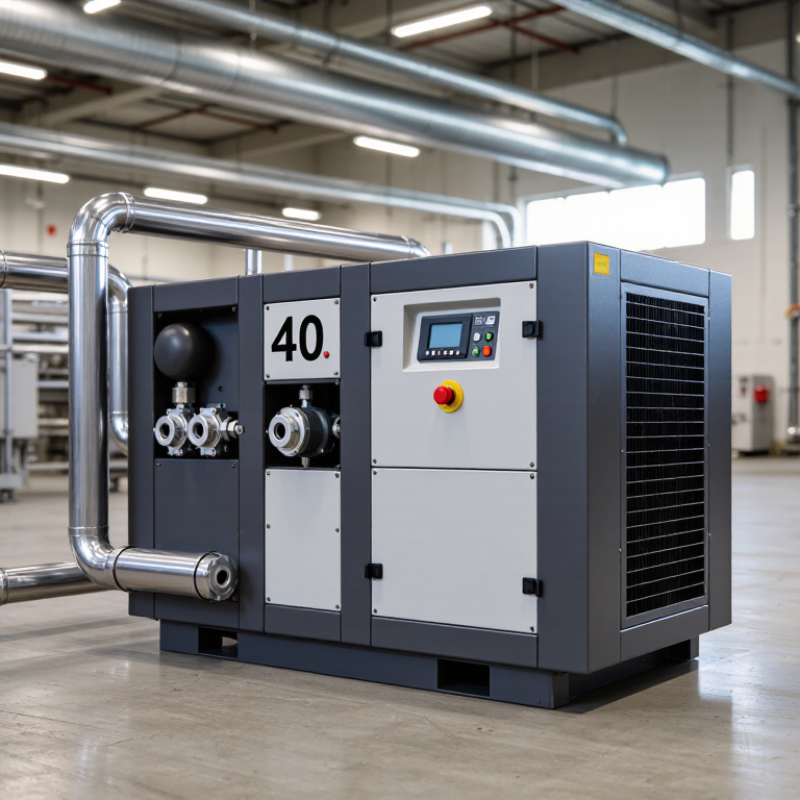
2026 Best 40 HP Screw Air Compressor for Sale?

What a 40 HP Screw Air Compressor Is and How It Works

A 40 HP screw air compressor uses two meshing helical rotors to draw in air, trap it, and compress it as the space between the rotors narrows. The motor rating is about 29.8 kW of mechanical power, but actual electrical demand varies with pressure, controls, and operating conditions. Not a fixed output. Oil-injected models use oil to seal, cool, and lubricate the compression chamber; oil-free designs keep oil out of that chamber. Both need suitable filtration and cooling. A receiver tank can help steady demand, but it does not make an undersized compressor adequate.

In practice, air enters through an intake filter, passes through the compression stage, then moves through cooling and, on oil-injected units, oil separation. The delivered air may also need drying before it reaches tools or production equipment. The U.S. Department of Energy’s Improving Compressed Air System Performance: A Sourcebook for Industry reports that compressed air can account for around 10% of electricity use in manufacturing. Its guidance also notes that leaks may waste 20–30% of compressor output in poorly maintained systems. That makes leak checks and pressure measurement useful, not glamorous. I would not treat “40 HP” as a guarantee of a particular airflow: compare the manufacturer’s rated delivery at your required pressure, and check real demand across a full shift. A small mismatch can mean needless cycling or pressure drops.

Key Specifications That Define Compressor Performance

A 40 hp rating tells you the motor size, not the air available at your tools. For a screw compressor, compare free air delivery (FAD) at the pressure you actually need. A unit delivering 150 cfm at one pressure may provide less at a higher setting. Check CAGI performance data sheets. They report airflow and specific power under standardized ISO 1217 test conditions. Compare matching pressure, cooling method, and configuration. Small details matter.

The U.S. Department of Energy’s Improving Compressed Air System Performance guide reports that leaks can waste 20–30% of compressor output in some plants; an effective leak program can reduce this below 10%. That makes measured demand important before choosing a 40 hp model.

Ask for specific power, operating pressure, motor voltage, and control type, such as variable-speed or load/unload. Include dryer and filter pressure losses in the calculation. A receiver tank helps manage short demand peaks, but it cannot fix inadequate sustained airflow. Noise and service access matter too. They’re easy to overlook. One imperfect step in many comparisons is trusting a headline cfm figure without checking its test conditions.

Types of 40 HP Screw Compressors and Their Applications

2026 Best 40 HP Screw Air Compressor for Sale?
Types of 40 HP Screw Compressors and Their Applications

A 40 HP screw compressor suits many workshops and production lines with steady, substantial air demand. Fixed-speed models run at a consistent output, making them a practical fit for equipment used throughout a shift. Variable-speed models adjust motor speed as demand changes, which may reduce wasted energy in facilities with fluctuating air use. The right choice depends on measured demand, pressure requirements, and operating hours—not horsepower alone.

Oil-injected compressors are commonly used for general manufacturing, vehicle service, and pneumatic tools. Oil-free models may suit applications with strict air-purity requirements, such as certain food or pharmaceutical processes; confirm the required air quality with a qualified specialist. A 40 HP rating does not guarantee a particular airflow. Actual output varies by pressure, design, and conditions. It is easy to overlook this detail when comparing listings.

Tips: Record peak and average air use before buying. Check the dryer, filters, receiver, and room ventilation too. Not every shop needs one. If demand changes by the hour, compare operating costs over time; a variable-speed unit may help, but installation and maintenance still matter.

How to Choose a 40 HP Compressor for Your Facility

How to Choose a 40 HP Compressor for Your Facility

A 40 HP screw compressor should match your facility’s measured air demand, not just its machine list. Check the required flow at the pressure your tools and production equipment actually need. A compressor’s delivered air can vary with operating pressure, ambient temperature, and installation conditions, so compare performance data at realistic settings.

Start with a demand log during a busy shift.

Look for sharp pressure drops when several machines run together. They may point to undersized piping, clogged filters, or leaks—not a compressor that needs replacing. Small leaks add up. Review your peak demand, normal operating hours, and any planned expansion before choosing capacity.

I have seen sizing decisions lean too heavily on peak figures; it is worth checking whether those peaks are frequent or only brief.

Check the complete system, including the air receiver, dryer, filters, ventilation, and electrical supply. A warm, dusty compressor room can affect cooling and maintenance, while poor drainage can let moisture travel downstream. Confirm service access around the unit and ask for sound and energy data under your expected load.

A 40 HP rating alone does not tell you how efficiently the compressor will run when demand falls. Keep room for uncertainty: production schedules change, and estimates are not measurements.

Where to Buy and What to Check Before Purchasing in 2026

In 2026, a 40 HP screw air compressor is best sourced through industrial equipment dealers, authorized service distributors, or a manufacturer’s sales office. Ask whether the unit is new, refurbished, or used; listings can blur those categories. Request a written quotation covering the exact model, included dryer or receiver, freight, commissioning, and warranty terms. Local service matters. A low price is less useful if routine support requires a technician to travel several hours.

Before paying, match the compressor’s delivered airflow (CFM) and pressure (PSI) to your tools and peak demand, not just the 40 HP label. Check the data plate, operating hours, maintenance records, filter and separator history, and alarm logs. For a used machine, request a witnessed test at operating temperature. Listen for bearing noise and watch for leaks, unstable pressure, or frequent cycling. Have a qualified technician review incomplete records. They often are.

Confirm the site’s electrical supply, phase, voltage, ventilation, and clearance before delivery. Ask which parts are included and how quickly service items can be supplied. Compare energy use at your expected load; an oversized unit may idle too often. I would leave room for doubt: a clean cabinet does not prove careful maintenance. Get serial-number documentation and service commitments in writing, then compare total installed cost rather than sticker price.

FAQS

What does a 40 HP rating tell me?

It describes motor size, not guaranteed airflow. Actual electrical use and delivered air vary with pressure and operating conditions.

How should I compare compressor airflow?

Check free air delivery at your required pressure. Compare test conditions and configuration, not just headline CFM figures. Small detail.

Is a 40 HP compressor suitable for my workshop?

It may suit steady, substantial air demand. Record peak and average use across a full shift before choosing.

What is the difference between fixed-speed and variable-speed models?

Fixed-speed models provide consistent output. Variable-speed models adjust to changing demand and may reduce wasted energy in some facilities.

Should I choose an oil-injected or oil-free model?

Oil-injected models suit many general applications. Oil-free designs may suit processes with strict air-purity requirements; verify the required air quality.

Can a receiver tank compensate for low compressor output?

It can help manage brief demand peaks. It cannot make an undersized compressor meet sustained airflow needs. Not a fix.

How much can air leaks affect performance?

Leaks may waste 20–30% of compressor output in poorly maintained systems. Regular leak checks and pressure measurements can reveal losses.

What else should I check before installation?

Review dryer and filter pressure losses, ventilation, noise, and service access. I might overlook one of these during a quick comparison.

Conclusion

A 40 Hp Screw Air Compressor is designed to deliver a steady supply of compressed air for facilities with demanding, continuous workloads. Its screw mechanism compresses air through rotating elements, while its real-world performance depends on factors such as airflow, working pressure, motor efficiency, cooling, and noise level. Common options include fixed-speed and variable-speed models, as well as oil-injected and oil-free designs, each suited to different operating patterns and air-quality requirements.

Choosing the right compressor in 2026 starts with measuring your facility’s air demand and pressure needs, then considering duty cycle, energy use, available space, maintenance access, and compatibility with existing equipment. Before purchasing, compare technical specifications, confirm what accessories and service support are included, and review warranty terms and delivery arrangements. A well-matched unit can help provide reliable air while controlling operating costs over its service life.

Sophia

Sophia

Sophia is a dedicated marketing professional with an exceptional depth of knowledge about her company's products and services. With a keen understanding of market trends and customer needs, she crafts insightful blog posts that not only inform but also engage readers, enriching the company’s online......