Choosing the 2026 best Double Stage Screw Compressor requires more than comparing catalog prices. Global buyers must examine air demand, pressure stability, energy use, cooling design, and service access. A machine that performs well in a dry European plant may struggle in a humid coastal factory. Ambient temperature matters. So does altitude.
This guide introduces a practical framework for evaluating leading models and manufacturers. It considers verified performance data, oil injection systems, motor efficiency, control technology, noise levels, and maintenance intervals. Real operating details matter, including filter replacement time, separator access, and the distance to trained service technicians. Buyers should also confirm electrical compatibility, documentation quality, warranty terms, and local regulatory requirements before signing a contract. Certifications help, but they do not replace independent technical review.
No single compressor fits every facility. That is the uncomfortable part. A lower purchase price can hide higher energy costs, limited spare parts, or difficult repairs. Some published efficiency figures may reflect ideal laboratory conditions rather than a dusty production floor. This guide therefore treats manufacturer claims carefully and encourages buyers to request test reports, references, and total-cost calculations. The final choice should match the actual duty cycle, not just a polished brochure. Expect trade-offs. Review them openly. Reliable procurement depends on evidence, experienced evaluation, and realistic expectations about performance over many years.
What Is a Double-Stage Screw Compressor?
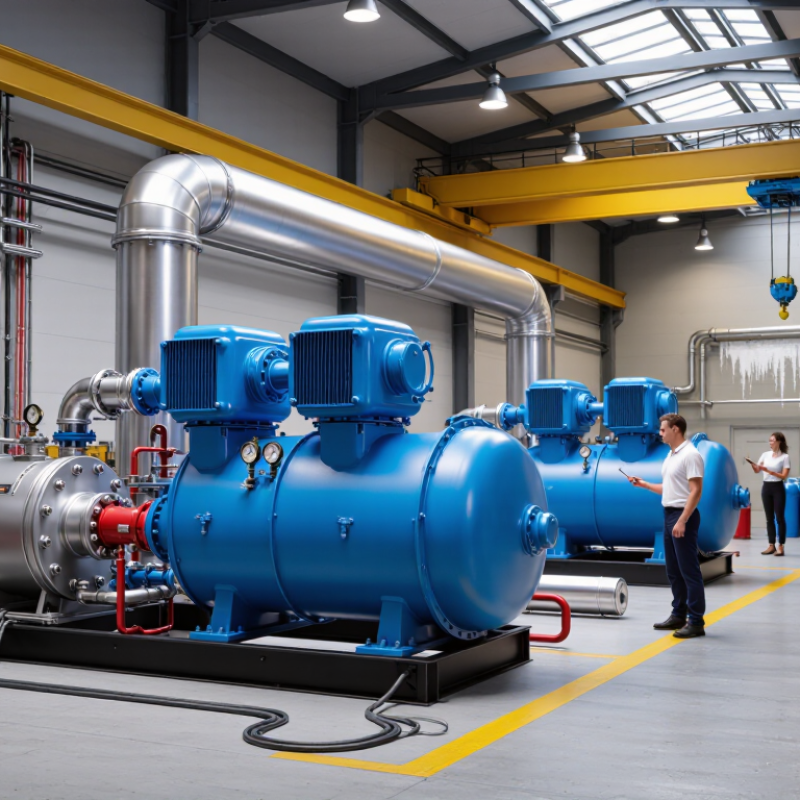
A double-stage screw compressor compresses air through two connected screw stages instead of one. Air enters the low-pressure stage, where rotating male and female rotors reduce its volume. The partially compressed air then passes through an intercooler before reaching the high-pressure stage. Cooling matters. It lowers the air temperature and reduces the work required during the second compression step.
This design divides the total pressure increase between two stages. It can deliver steadier high-pressure air, lower discharge temperatures, and improved efficiency under demanding operating conditions. Interstage cooling, oil separation, and precise control systems strongly affect its performance. In field inspections, I would check filter pressure drop, cooler cleanliness, condensate drainage, and rotor-bearing vibration. Small problems often appear as rising temperature or longer loading cycles.
A two-stage unit is not automatically the best choice. That assumption is too simple. If demand changes sharply, an oversized compressor may waste energy during unloading. Poor cooling can also remove much of the expected efficiency advantage. Buyers should compare actual flow, working pressure, duty cycle, ambient temperature, and maintenance access. A properly matched system may provide reliable service for years, but the installation details deserve more attention than the equipment label.
How Double-Stage Compression Technology Works
2026 Best Double Stage Screw Compressor for Global Buyers?
How Double-Stage Compression Technology Works
A double-stage screw compressor divides compression between two screw elements. The first stage draws in atmospheric air and raises its pressure moderately. An intercooler then removes much of the heat before the second stage compresses the air further. This staged process reduces the workload on each rotor pair. It can also lower discharge temperature and improve energy efficiency during continuous operation.
The details matter. A properly sized intercooler, accurate oil separation, and stable control system support reliable performance. In practical installations, technicians should check airflow, cooling-water quality, filter pressure drop, and lubricant condition. Small restrictions can increase power consumption. Poor cooling can shorten service life.
It is not automatically better.
A two-stage design suits high-pressure, steady-duty applications more than lightly loaded workshops. Buyers should compare required pressure, flow variation, ambient temperature, altitude, voltage, and local safety requirements. A compressor designed for a cool factory may perform differently in a hot coastal plant. That point is often missed. Global purchasers should also request performance data at realistic inlet conditions, not only ideal laboratory values. The most dependable choice balances efficiency, maintenance access, spare-part availability, noise limits, and trained service support. Cost alone can hide future operating problems.
2026 Best Double-Stage Screw Compressor for Global Buyers?
How Double-Stage Compression Technology Works
The chart compares the overall pressure ratio with the ideal pressure ratio handled by each stage in a two-stage compressor. Equal stage loading is calculated as the square root of the total pressure ratio, helping reduce the compression work and discharge temperature of each individual stage.
Values shown are mathematically calculated ideal ratios: per-stage ratio = √(total pressure ratio). Actual operating results vary with suction conditions, interstage cooling, oil injection, leakage, speed, and compressor design.
Key Performance Features for Global Buyers in 2026
In 2026, global buyers are judging double-stage screw compressors by measured output, not catalogue horsepower. The U.S. Department of Energy reports that compressed air can consume 10–20% of a plant’s electricity. That makes specific power a purchasing metric, alongside flow, discharge pressure, and part-load efficiency. A two-stage design compresses air in steps, reducing internal pressure stress and often improving efficiency at higher pressures. Look for tested kW per cubic metre, stable oil separation, and discharge temperatures that protect downstream dryers. Small details matter.
The IEA’s Energy Efficiency 2023 report identifies motor-driven systems as a major industrial efficiency opportunity. Buyers should compare the complete package: motor, inverter, cooling system, controls, and maintenance intervals. A variable-speed drive can follow fluctuating demand, but poor sizing may create losses at low load. Ask for ISO 1217 test conditions, sound-power data, altitude limits, and service records from similar installations. In hot, dusty sites, filters and coolers need practical access, not impressive specifications. The trade-off is real. A lower purchase price can hide energy and service costs over ten years. Published figures still need checking; ambient conditions, leakage, and operator habits can change results significantly.
How to Compare Models, Efficiency, and Total Cost
2026 Best Double Stage Screw Compressor for Global Buyers?
Comparing double-stage screw compressors starts with verified air delivery, not the brochure’s headline motor size. Request test data at the same pressure, flow, inlet temperature, and electrical frequency. ISO 1217 provides a useful framework for measuring compressor performance. Specific power, expressed as kW per cubic metre per minute, reveals efficiency more clearly than horsepower.
The U.S. Department of Energy reports that compressed air can represent 10% to 15% of industrial electricity use. Its compressed-air guidance also identifies leakage as a frequent source of avoidable waste. Therefore, compare full-load and part-load performance, control response, dryer demand, and leak-monitoring options. A lower purchase price may become expensive beside a poorly matched receiver or unstable production schedule.
Look beyond the compressor invoice. The European Commission’s energy-efficiency work consistently emphasizes lifecycle energy as a major cost in motor-driven equipment. Build a five-year model including electricity, filters, oil, cooling, maintenance labor, downtime, and disposal. Ask for measured noise levels and service intervals. Two-stage compression can improve pressure efficiency, but not in every operating profile. I would recheck any claimed saving without independent test conditions. Global buyers should also verify voltage, ambient-temperature limits, spare-parts access, and local service capability before approval.
2026 Best Double Stage Screw Compressor for Global Buyers? - How to Compare Models, Efficiency, and Total Cost
The comparison below uses representative oil-injected, double-stage screw compressor configurations commonly specified for industrial compressed-air systems. Values are practical reference ranges rather than manufacturer-specific claims; final performance depends on inlet conditions, control settings, cooling water or ambient temperature, and local electrical standards.
Installation, Maintenance, and International Purchasing Factors
A reliable double stage screw compressor starts with a disciplined installation. Place it on a level, vibration-resistant foundation with enough clearance for service access. Keep intake air cool, clean, and away from chemical vapors. Poor ventilation can raise discharge temperature and shorten oil life. Small errors matter. Check shaft alignment, pipe supports, drain routing, and motor rotation before commissioning.
Maintenance should follow operating conditions, not only calendar dates. Inspect oil level, filters, belts, couplings, and temperature readings during each scheduled visit. Record pressure, current, noise, and oil consumption. These trends often reveal trouble before an alarm appears. Clean coolers carefully, especially in dusty factories. Use the specified lubricant and confirm its compatibility with seals. A neglected separator may increase energy use and carry oil into the air network. It is not glamorous.
For international purchasing, compare performance at your actual pressure, flow, altitude, and ambient temperature. Request factory test data, wiring diagrams, spare-parts lists, service manuals, and a clear warranty scope. Confirm voltage, frequency, enclosure rating, local certification, and applicable electrical and pressure regulations. Shipping protection deserves attention; moisture damage can begin inside a sealed crate. Include commissioning support and remote troubleshooting in the contract. Delivery price alone can mislead. A cheaper machine may need specialized parts that arrive slowly. I have seen buyers overlook customs classification and service training, then lose production during the first filter change. Measure twice. The specification may still need revision.
FAQS
It compresses air through two connected screw stages. The first stage lowers the air volume. An intercooler then cools the partially compressed air before the second stage.
Cooling reduces air temperature between compression steps. It also lowers the work needed during the second stage. Poor cooling can erase much of the expected efficiency gain.
It can deliver steadier high-pressure air and lower discharge temperatures. It may also improve efficiency during demanding, high-pressure operation.
No. An oversized unit may waste energy during unloading. A system with sharply changing demand may need careful sizing and variable-speed control.
Compare actual airflow, working pressure, duty cycle, ambient temperature, and maintenance access. Specific power matters too, such as measured kilowatts per cubic metre.
Review the motor, inverter, cooling system, controls, and service intervals. The complete package matters more than the equipment label.
Filters and coolers need easy access for cleaning. Buyers should check altitude limits, sound-power data, and cooling capacity. Small access problems become expensive.
Check filter pressure drop, cooler cleanliness, condensate drainage, and rotor-bearing vibration. Rising temperature or longer loading cycles may reveal trouble. Do not ignore small changes.
Conclusion
A Double Stage Screw Compressor uses two sequential compression stages to raise air pressure more efficiently than a single-stage design. The first stage performs initial compression, while the second further increases pressure after controlled cooling and flow management. This arrangement can improve energy efficiency, reduce heat-related stress, and provide stable performance for demanding industrial applications. For global buyers in 2026, important features include reliable pressure delivery, adaptable capacity control, low noise, advanced monitoring, durable components, and compatibility with different operating environments.
When comparing models, buyers should evaluate specific power consumption, output capacity, pressure range, service life, warranty conditions, and total ownership cost rather than focusing only on the purchase price. Proper installation requires suitable ventilation, clean foundations, correct piping, and appropriate electrical preparation. Regular maintenance should include filter replacement, lubricant checks, leak inspection, temperature monitoring, and scheduled servicing. International purchasers should also confirm documentation, shipping requirements, spare-parts availability, technical support, safety compliance, and after-sales communication before selecting a system.