
2026 Top Industrial Rotary Screw Air Compressor Types

Time:2026-10-27 Author:Mason
0%

The 2026 Top Industrial Rotary Screw Air Compressor Types guide examines the machines shaping modern plant air systems. It covers oil-injected, oil-free, fixed-speed, variable-speed drive, and two-stage compressors. Each type serves a different operating reality. A food plant may require certified oil-free air. A metal workshop may prioritize rugged oil-injected performance. A factory with changing shifts may benefit from variable-speed control.

Hank Van Ormer, a respected compressed-air auditor and educator, has stated, “Compressed air is the most expensive utility in a plant.” This warning remains highly relevant. Compressor price alone cannot reveal the true investment. Energy consumption, pressure losses, maintenance intervals, cooling requirements, and moisture control also influence ownership costs. A 75-kilowatt compressor running beside a hot production line creates different demands than one installed in a clean, temperature-controlled room.

This guide uses practical engineering principles and field-based considerations. It explains how technicians compare flow, pressure, efficiency, control systems, and air purity. It also considers noise, footprint, service access, and recovery of waste heat. Small details matter. A blocked intake filter can raise energy use. Poor pipe sizing can make an efficient compressor appear weak.

Still, no single type wins everywhere. That conclusion deserves more attention. Some recommendations may change after a proper air audit, seasonal review, or production expansion. Readers should question attractive efficiency claims and examine measured performance. The best Industrial Rotary Screw Air Compressor matches real demand, not merely a brochure specification.
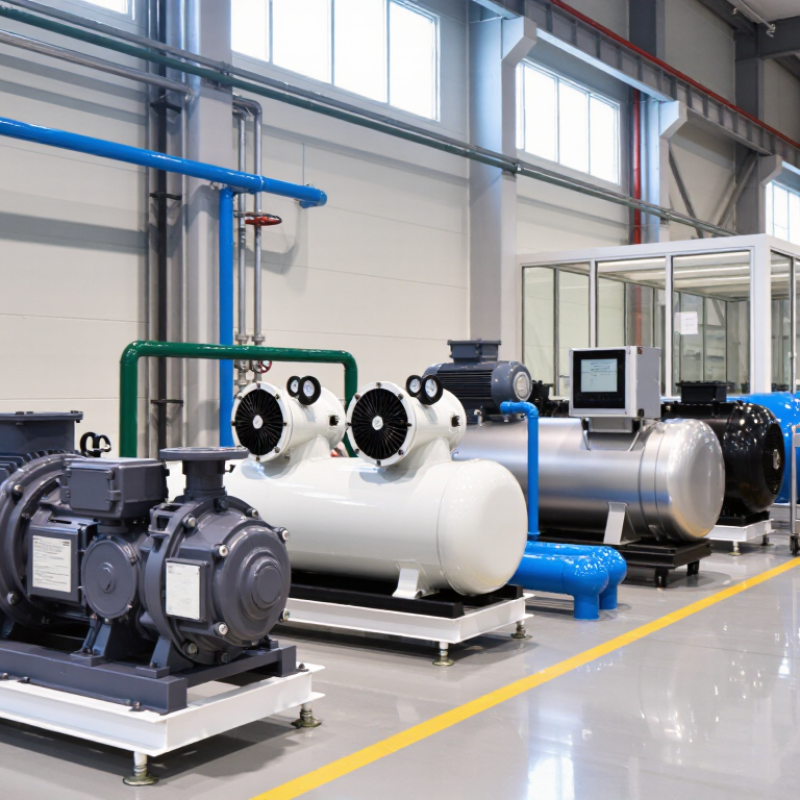
2026 Top Industrial Rotary Screw Air Compressor Types

Industrial Rotary Screw Air Compressors: Definition and Operating Principles

Industrial rotary screw air compressors use two helical rotors inside a closely machined housing. Air enters through the inlet valve, fills the rotor grooves, and moves toward the discharge side. As the grooves become smaller, air pressure rises continuously. The rotors do the work.

In oil-injected models, a controlled oil flow seals clearances, removes heat, and lubricates bearings. A separator then removes most oil before compressed air leaves the package. Oil-free designs avoid oil in the compression chamber, often using two compression stages and intercooling. Fixed-speed units suit steady demand, while variable-speed models adjust motor speed when factory consumption changes. Not magic. Just controlled volume reduction.

The U.S. Department of Energy reports that compressed air can represent about 10% of industrial electricity use. Its compressed-air guidance also indicates that leaks may waste 20–30% of compressor output in poorly maintained systems. These figures make operating practice as important as compressor selection. Technicians should record pressure, flow, temperature, and loaded hours before changing equipment. ISO 1217 provides performance-testing methods, while ISO 8573-1 classifies compressed-air purity. A practical warning remains: published efficiency values may not match a dusty plant, undersized piping, or fluctuating demand. Measurement matters.

Main Types of Industrial Rotary Screw Air Compressors

Industrial rotary screw air compressors are commonly classified by lubrication, speed control, and compression stages. Oil-injected models use oil to lubricate, seal, and cool the rotors. They suit workshops, metal plants, packaging lines, and general pneumatic tools. A separator removes oil from the discharge air, while filters protect downstream equipment. Regular oil analysis matters.

Oil-free rotary screw compressors keep lubricants away from the compression chamber. They are preferred for pharmaceutical production, food processing, electronics, and other sensitive applications. These machines require careful cooling, water treatment, and maintenance. “Oil-free” does not mean maintenance-free. That assumption causes trouble.

Fixed-speed compressors work well where air demand stays steady, such as a continuous production line. Variable-speed models adjust motor speed as demand changes. They can reduce wasted energy during partial-load operation, but their savings depend on the actual load profile. Single-stage units often meet ordinary pressure needs, while two-stage designs can support higher pressures with improved efficiency. In practice, no type fits every factory. A site survey should check flow demand, pressure variation, room temperature, duty cycle, air quality, and future expansion before selection.

Key Components and Compression Technologies

In 2026, industrial rotary screw compressors mainly use oil-injected, oil-free, fixed-speed, or variable-speed designs. Their shared core is a twin-screw air end, where matched rotors compress air continuously. Key components include the electric motor, bearings, inlet valve, oil separator, minimum-pressure valve, controller, and aftercooler. Each component affects pressure stability, service life, and energy use.

Variable-speed drives adjust motor speed when demand changes. This can reduce unloaded running, especially in plants with uneven production schedules. The U.S. Department of Energy’s Improving Compressed Air System Performance guide identifies compressed air as a significant industrial electricity user and highlights leakage, pressure, and control losses. Compressed Air Challenge materials estimate that leaks can waste 20–30% of compressor output. Small parts matter. A damaged separator can raise oil carryover, while a blocked cooler increases discharge temperature.

Oil-injected systems usually offer efficient, compact operation for general manufacturing. Oil-free models use specialized air ends when contamination control is critical. Two-stage compression can improve efficiency at higher pressures, but it adds valves, coolers, and maintenance points. ISO 1217 testing provides a useful basis for comparing delivered airflow and specific power. Still, published ratings may not match a dusty factory floor. Field measurements should include inlet temperature, pressure drop, leak rate, and real load profile. Heat remains stubborn. A compressor selected only by motor size may look adequate, yet perform poorly during shift changes.

2026 Top Industrial Rotary Screw Air Compressor Types: Key Components and Compression Technologies

Typical discharge-pressure ranges for major rotary screw compressor configurations. Oil-injected single-stage units commonly serve general plant air, while oil-free two-stage designs support higher-pressure and contamination-sensitive applications.

Representative industry operating ranges in bar(g); actual limits depend on compression stages, airend design, cooling system, separator, inlet valve, drive motor, and control technology.

How to Select a Rotary Screw Air Compressor for Industrial Use

How to Select a Rotary Screw Air Compressor for Industrial Use

Selecting a rotary screw air compressor starts with the demand profile, not the nameplate. Fixed-speed models suit steady production loads. Variable-speed models can reduce energy waste when demand changes frequently.

The U.S. Department of Energy reports that compressed air may consume about 10% of industrial electricity. That makes efficiency a purchasing issue, not a minor specification.

Measure flow during shifts, pressure at the farthest tool, and peak demand during equipment start-up. An oversized compressor may cycle inefficiently and increase maintenance costs.

Oil-injected compressors often fit general manufacturing, workshops, and pneumatic tools.

Oil-free designs deserve consideration where air contacts food, medicine, electronics, or sensitive coatings.

Check the required ISO 8573-1 air quality class before choosing treatment equipment. ISO 11011 also recommends evaluating the complete compressed-air system, including dryers, filters, storage, and distribution.

Compressor efficiency alone is not enough. A polished quotation can still hide pressure losses in old piping.

Tips:

Log demand for at least one production week. Check for leaks after shutdown; the U.S. Department of Energy notes that leaks can waste 20–30% of compressor output. Compare lifecycle cost, not only purchase price. Ask for measured specific power, expressed in kilowatts per cubic metre per minute. Leave capacity margin, but question every extra kilowatt. I would avoid selecting from average demand alone. Real factories rarely behave so neatly.

2026 Trends in Industrial Rotary Screw Air Compressor Systems

Industrial rotary screw air compressor systems are changing quickly in 2026. Energy efficiency now influences nearly every purchasing decision. In daily operation, variable-speed drives adjust motor output when production demand falls. This can reduce wasted power during quiet shifts. However, savings depend on correct sizing and stable operating conditions. An oversized compressor may still cycle inefficiently.

Connected monitoring is becoming more practical, not merely fashionable. Sensors track discharge temperature, pressure, vibration, and filter condition. Maintenance teams can review trends before a bearing problem becomes an expensive shutdown. I have found that simple alerts often help more than crowded dashboards. Data must support a clear action. Otherwise, it becomes digital noise.

Heat recovery is also gaining attention in factories with steady thermal demand. Recovered compressor heat can warm process water, workshops, or cleaning systems. Proper system design remains essential. Poorly matched recovery equipment may deliver disappointing results. Oil separation, ventilation, and condensate management still require regular inspection. New controls cannot repair neglected air leaks. Small leaks matter.

Low-pressure applications are receiving more specialized solutions, while oil-free designs serve sensitive production environments. Yet oil-free does not mean maintenance-free. Operators still need documented inspections and clean intake conditions. I would question any forecast promising effortless efficiency. Real performance depends on installation quality, operator habits, ambient temperature, and honest measurement. The best 2026 systems combine efficient hardware with experienced people.

FAQS

What is an industrial rotary screw air compressor?

It uses two helical rotors inside a closely machined housing. Air enters the rotor grooves and moves toward the discharge side. The shrinking grooves continuously raise air pressure. The rotors do the work.

How does an oil-injected compressor manage heat and sealing?

Controlled oil seals small clearances, lubricates bearings, and removes compression heat. A separator removes most oil before air leaves the package. The remaining air still needs suitable filtration for its application.

When should an oil-free compressor be considered?

Consider oil-free compression when air contacts food, medicine, electronics, or sensitive coatings. These designs avoid oil inside the compression chamber. Many use two stages with intercooling. The choice depends on required air purity.

Should a factory choose fixed-speed or variable-speed equipment?

Fixed-speed equipment suits steady production demand. Variable-speed equipment adjusts motor speed as consumption changes. It may reduce energy waste during fluctuating demand. Not every factory needs it.

How should compressed-air demand be measured before selection?

Record flow during shifts and pressure at the farthest tool. Measure peak demand during equipment start-up. Log demand for at least one production week. Average demand alone can mislead.

Can air leaks significantly increase operating costs?

Yes. Poorly maintained systems may lose 20–30% of compressor output through leaks. Check for escaping air after shutdown. Listen near fittings, hoses, valves, and joints. Small leaks become expensive over time.

Is a larger compressor always the safer choice?

No. An oversized compressor may cycle inefficiently and increase maintenance costs. Leave reasonable capacity margin, but question every extra kilowatt. A larger nameplate does not fix poor piping. This needs honest review.

What else should be evaluated besides compressor efficiency?

Review dryers, filters, storage, and distribution piping as one system. Measure pressure losses in older or undersized pipes. Compare lifecycle cost, not only purchase price. Ask for measured specific power in kilowatts per cubic metre per minute. Published values may not match a dusty plant.

Conclusion

An Industrial Rotary Screw Air Compressor is a reliable compressed-air system that uses rotating screw elements to continuously compress air for demanding industrial applications. This article explains how the compression process works and compares major types, including oil-injected and oil-free designs, fixed-speed and variable-speed models, and single-stage and two-stage configurations. It also introduces essential components such as air ends, motors, separators, filters, cooling systems, control units, and air treatment equipment, while highlighting how different compression technologies affect efficiency, air quality, maintenance, and operating stability.

The guide also provides practical considerations for selecting an Industrial Rotary Screw Air Compressor, including required airflow, working pressure, duty cycle, installation conditions, noise limits, energy consumption, service access, and lifecycle cost. Looking toward 2026, industrial compressor systems are expected to place greater emphasis on intelligent monitoring, energy optimization, heat recovery, compact designs, predictive maintenance, and improved integration with automated production environments.

Mason

Mason

Mason is a seasoned marketing professional with a deep expertise in the company's offerings and a passion for driving brand awareness. With a strong background in digital marketing strategies, he has an innate ability to connect with diverse audiences and effectively communicate product benefits.......