
Choosing among the top screw air compressor distributors for global buyers requires more than comparing prices. A reliable Screw Air Compressor Distributor should understand pressure demands, air quality requirements, duty cycles, and local power standards. For example, a food processing plant may need an oil-free compressor, while a metal workshop may prefer an oil-injected model for lower operating costs. These differences affect efficiency, maintenance, and long-term performance.
Practical experience often reveals what product pages omit. Buyers should check compressor output, noise levels, motor efficiency, spare parts availability, and response times for technical support. Ask whether the distributor can provide installation guidance, commissioning records, and clear warranty terms. Certifications matter, but they should match the destination market and the equipment’s actual application. A polished website is not enough.
Service matters most.
A strong distributor communicates honestly about delivery limits, maintenance schedules, and total ownership costs. It should explain whether replacement filters, air ends, controllers, and valves are readily available. Customer references can also reveal how the company performs after payment. Still, no distributor is perfect. Some may offer excellent engineering but weaker regional support. Others may ship quickly yet lack trained technicians. This comparison should therefore examine evidence, not promises, helping global buyers select equipment that remains dependable in real working conditions.
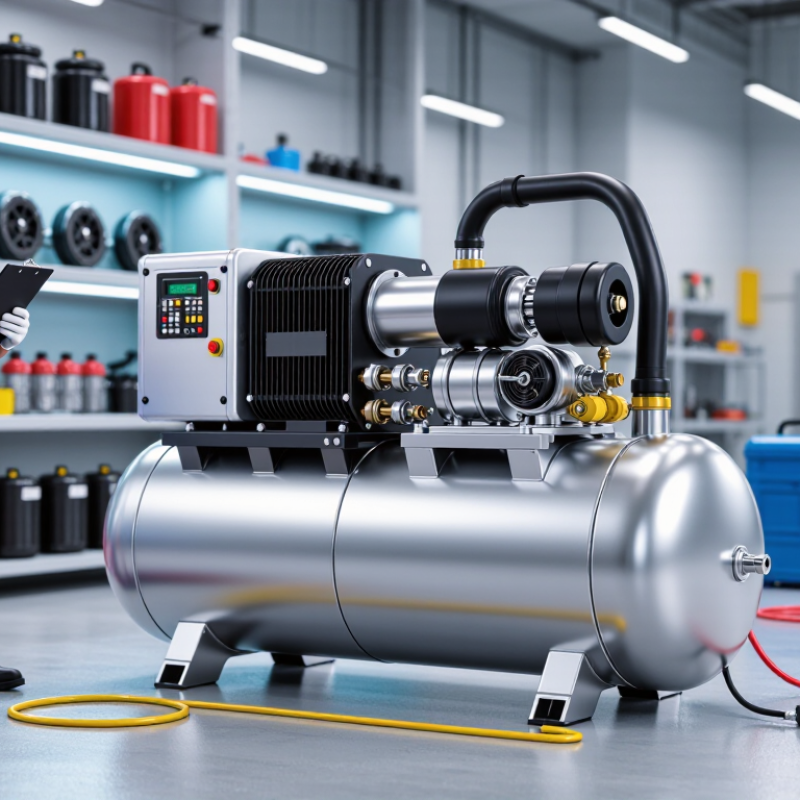
A reliable screw air compressor distributor does more than offer a competitive price. For global buyers, trust shows in accurate specifications, practical technical support, and delivery estimates that account for shipping time. Ask for operating pressure, airflow, duty cycle, voltage, and ambient temperature requirements in writing. A careful distributor checks these details before recommending a model. That small step matters.
Support after delivery is just as important. Confirm who handles installation guidance, spare-parts requests, and troubleshooting across time zones. Ask whether manuals, maintenance schedules, and parts lists are available in a language your team can use. Request references from buyers with similar operating conditions, and verify service response times rather than relying on broad promises. A polished quotation is useful, but it cannot prove every claim. No checklist catches every mismatch; buyers should compare the proposal with their actual site needs.
Tips: Share your expected hours of use and peak air demand before requesting a quote. Ask for a written list of included accessories and recommended maintenance intervals. Check that electrical details match your facility. If an answer feels vague, ask for a specific example. It may take another email, but that extra clarification can prevent an expensive assumption.
A strong screw air compressor distributor should offer more than a long catalog. Check whether its range covers the required flow, pressure, duty cycle, and cooling conditions. Ask for performance data at your actual operating pressure, not just a headline efficiency figure. The U.S. Department of Energy’s Improving Compressed Air System Performance sourcebook notes that compressed air can represent about 10% of industrial electricity use, with higher shares in some facilities. Small efficiency differences matter over long operating hours. So does correct sizing.
Technical expertise shows in the questions a distributor asks. Can its staff review a pressure profile, explain oil-injected versus oil-free operation, and help specify filtration and dryers against ISO 8573-1 air-quality needs? Request commissioning records, a sample maintenance checklist, and a clear method for checking leakage. The DOE sourcebook reports that leaks commonly waste 20% to 30% of compressor output. That is easy to overlook. A detailed catalog cannot prove field competence, and even capable teams may have service gaps.
Service capacity should be tested before purchase. Ask where spare parts are stocked, how quickly technicians can reach your site, and whether remote monitoring is supported. Confirm coverage for evenings or peak production periods, not merely stated office hours. Compare response commitments in writing. Then speak with a customer operating similar equipment in similar conditions. Real service records are more useful than broad promises.
Global screw air compressor sourcing is shaped by three supplier types: manufacturers selling directly, authorized regional distributors, and independent engineering firms. Direct channels can suit large projects needing configuration support. Distributors often provide nearby stock, installation coordination, and service technicians. Independent firms may compare several suppliers, but buyers should verify their technical depth. Not all are alike.
Regional strengths vary. East Asian production hubs offer broad equipment selection, while European and North American networks commonly emphasize application support and lifecycle service. These are sourcing patterns, not guarantees; local capability matters more than a supplier’s address. The U.S. Department of Energy’s Improving Compressed Air System Performance guide reports that compressed air can use about 10% of industrial electricity, and substantially more in some facilities. That makes efficiency checks practical: request measured flow, pressure, specific power, and part-load performance, not just rated horsepower. A useful distributor should also explain filter changes, condensate handling, spare-parts lead times, and commissioning records. Ask for references from comparable duty cycles. A polished quotation can still omit the hard part: reliable service after installation.
| Top Screw Air Compressor Distributors for Global Buyers? - Which Regions and Supplier Types Serve International Compressor Markets? | ||||
|---|---|---|---|---|
| Region | Common Supplier Types | Typical Products and Services | International Buying Considerations | Useful Supplier Checks |
| North America | Authorized local distributors, industrial-equipment distributors, and compressed-air service companies | Rotary screw compressors, air treatment equipment, installation, maintenance, and replacement parts | Confirm electrical configuration, local code requirements, delivery terms, and service coverage at the installation site. | Ask about technician availability, parts inventory, commissioning support, and written warranty terms. |
| Europe | National distributors, engineering integrators, and specialist compressed-air suppliers | Fixed-speed and variable-speed systems, dryers, filters, system assessments, and energy-efficiency services | Check applicable conformity documentation, voltage and frequency compatibility, and the availability of local-language manuals. | Request performance data, installation requirements, maintenance schedules, and documentation for the destination country. |
| Asia-Pacific | Regional importers, local dealers, industrial suppliers, and system integrators | Compressor packages, air receivers, treatment equipment, piping integration, and after-sales service | Compare import duties, lead times, port-to-site logistics, local electrical specifications, and service reach outside major cities. | Verify the supplier’s local service arrangements, spare-parts sourcing, commissioning process, and import documentation experience. |
| Middle East | Regional industrial-equipment distributors, project suppliers, and maintenance providers | Industrial compressor packages, dryers and filters, installation support, and planned maintenance | Confirm suitability for site temperature, dust exposure, operating conditions, and the project’s required delivery schedule. | Check environmental operating limits, site-support capacity, parts availability, and the scope of commissioning services. |
| Latin America | Local importers, industrial distributors, and service partners | Rotary screw compressors, air-treatment components, spare parts, and field maintenance | Clarify import responsibilities, customs documentation, taxes, delivery terms, and the time needed to obtain replacement parts. | Confirm local-language technical support, warranty handling, service-area coverage, and parts lead times. |
| Africa | Importers, industrial-equipment suppliers, project contractors, and regional service providers | Compressor packages, air treatment, installation coordination, and maintenance where locally available | Assess transport to the final site, power compatibility, customs requirements, operating environment, and access to qualified technicians. | Ask who provides on-site service, where common spare parts are stocked, and how warranty claims are handled locally. |
| Cross-Regional / Export Supply | Export distributors, international trading suppliers, and manufacturers’ export channels | Equipment supply, export packing, shipping coordination, and documentation support; local service may be provided by a separate partner | Agree on Incoterms, payment terms, export documents, destination-country compliance, and responsibility for installation and after-sales support. | Request a complete quotation listing model specifications, included accessories, shipping scope, warranty coverage, and the named service contact. |
| Buyer note: Supplier structures and service coverage vary by country. Confirm the exact compressor configuration, local compliance requirements, total landed cost, warranty terms, and post-sale support before ordering. | ||||
A screw air compressor quote should show more than the machine price. Check whether the package includes the motor, controller, aftercooler, filters, and any required air dryer. Ask for separate costs for commissioning, spare parts, freight, and import charges. Compare energy use against your actual duty cycle, not just the rated power. A unit running long shifts may make efficiency more important than a lower purchase price. Small details matter.
Certification needs to match the exact model and destination. Request copies of applicable electrical, pressure, and safety documents, then check that model numbers and ratings agree with the quotation. Requirements vary by market, so avoid relying on a generic certificate. Warranty terms deserve the same attention. Confirm coverage length, labor and travel costs, exclusions for wear parts, and how quickly replacement components can be supplied. A warranty is less useful if support is far away.
For logistics, ask for packed dimensions, gross weight, delivery terms, estimated dispatch date, and responsibility for customs paperwork. Confirm whether unloading equipment is needed at your site. Also ask who handles installation and commissioning locally. These checks can feel tedious, and I have seen buyers focus too much on the headline price. Still, a written answer is better than an assumption—especially when a shipment is already at port.
Suggested evaluation weights for comparing distributors. These are a practical buyer framework, not survey results or company-specific ratings.
How to use it: Compare written quotations, verify applicable certificates and their scope, confirm warranty terms and service coverage, and check delivery responsibilities and lead times. Adjust the weights to fit your project and destination market.
Compare distributors by how well they match a screw compressor package to your operating conditions, not catalog size. Share measured airflow demand, working pressure, daily run hours, and site temperature. A careful supplier will ask about altitude, dust, voltage, and future expansion before recommending a model. That matters.
Ask for written delivery estimates, commissioning scope, warranty terms, and a local service contact. Check whether common filters, oil separators, and belts are stocked near your site, and confirm typical replenishment times. An attractive price can become costly if one small part keeps production idle. Ask for references from facilities with similar duty cycles, then verify them directly when practical. Paperwork helps, but it is not proof.
Compare energy figures using the same pressure, flow, and operating schedule; otherwise, the numbers can mislead. Review service intervals, expected consumable costs, and response times alongside purchase price. I would not treat a polished proposal as certainty; site conditions often differ from planning sheets. A spreadsheet will not capture every delay, but it can expose assumptions worth challenging.
Share required pressure, airflow, daily operating hours, peak demand, voltage, and ambient temperature. Site details matter.
Direct manufacturers may support custom configurations. Regional distributors can offer nearby stock and service coordination. Independent firms may compare several options, but verify their technical experience.
Ask who handles installation guidance, troubleshooting, and spare-parts requests. Confirm response times across time zones. Request manuals in a language your team can use.
Request measured airflow, pressure, specific power, and part-load performance. Compare these with your actual operating schedule, not horsepower alone. Small details matter.
Check whether the package includes the motor, controller, aftercooler, filters, and dryer. Ask for separate freight, commissioning, spare-parts, and import costs.
Match each document to the exact model and destination. Check that model numbers and ratings agree with the quotation. Generic paperwork may not be enough.
Confirm coverage length, labor and travel costs, wear-part exclusions, and replacement-part lead times. A warranty is less useful when support is distant.
Request packed dimensions, gross weight, delivery terms, and an estimated dispatch date. Confirm who handles customs paperwork, unloading, installation, and commissioning. I would check twice; small omissions can become costly.
Choosing a reliable Screw Air Compressor Distributor requires more than comparing catalog prices. Global buyers should assess whether a supplier offers suitable compressor models and configurations, clear technical guidance, and enough service capacity to support installation, maintenance, and replacement parts. A strong distributor understands different operating requirements and can help match equipment to a buyer’s intended use rather than simply recommending the most expensive option.
Buyers should also compare suppliers by region, distribution model, product documentation, relevant certifications, warranty terms, and responsiveness. Before placing an order, confirm the full pricing structure, shipping arrangements, delivery estimates, packaging, and how service requests will be handled across borders. Comparing these factors side by side helps buyers identify a supply partner that balances product quality, technical support, dependable logistics, and long-term value. The best choice is one that communicates clearly and can support the equipment throughout its expected service life.
