
Top Air Cooled Screw Compressor Manufacturers Worldwide?

Time:2026-10-02 Author:Oliver
0%

Choosing among the top Air Cooled Screw Compressor manufacturers worldwide requires more than comparing brand names. Buyers must examine field experience, engineering depth, service coverage, and documented machine performance. A compressor may look efficient in a brochure, yet perform differently in a dusty factory, a hot warehouse, or a coastal plant.

Ron Marshall, a recognized compressed-air systems specialist, observes, “Compressed air is one of the most expensive forms of energy in a plant.” That warning matters. Energy consumption, pressure stability, oil management, cooling design, and maintenance access can influence operating costs for years. A reliable Air Cooled Screw Compressor should deliver steady airflow without creating unnecessary heat, noise, or downtime. Small details matter, including filter placement, belt or coupling design, controller visibility, and the time required to replace separators.

This guide evaluates leading global manufacturers through practical criteria, including product range, efficiency claims, international support, spare-parts availability, and proven applications. It also considers how manufacturers support users after installation. That part is often underestimated.

Real factories are not identical.

A technically advanced compressor may fail to suit a plant with unstable voltage or limited maintenance skills. Likewise, the cheapest purchase price may become expensive after repeated servicing. No worldwide ranking can be perfectly universal. Regional climate, electricity costs, industry standards, and local technician quality can change the result. Some information may remain difficult to verify publicly, so readers should request test data, warranty terms, and customer references before deciding. The strongest manufacturers are not merely selling equipment; they are helping plants produce dependable compressed air with measurable lifecycle value.
Top Air Cooled Screw Compressor Manufacturers Worldwide?

What Is an Air-Cooled Screw Compressor?

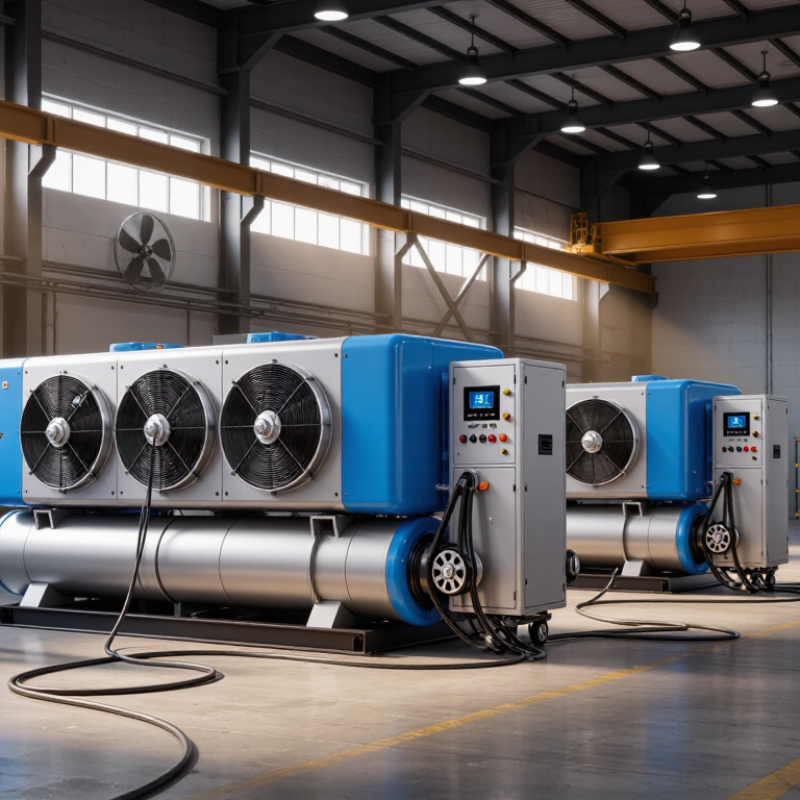
An air-cooled screw compressor uses two interlocking rotors to compress air continuously. Ambient air removes heat through an air-to-air or air-to-oil heat exchanger. No cooling tower or process-water circuit is required. That makes the equipment practical for workshops, factories, and remote installations where water quality is uncertain.

The compressor may use oil injection for sealing, lubrication, and temperature control. A separate separator removes most oil before discharge. Oil-free designs use different rotor clearances and cooling arrangements, so operating limits require closer attention. ISO 1217 defines performance testing, while ISO 8573-1 classifies compressed-air purity. These standards matter when comparing manufacturers worldwide, because advertised flow rates can change with pressure, inlet temperature, and measurement conditions.

Energy use deserves more scrutiny. The U.S. Department of Energy reports that compressed-air systems can consume about 10% of industrial electricity. Its guidance also identifies leaks as a potential loss of 20–30% of compressor output. Small leaks sound harmless, yet a constant hiss near a fitting can run every shift.

Maintenance records should track discharge temperature, separator pressure drop, filter condition, and actual airflow. The definition seems simple. Field conditions are not. A cooler room can improve capacity, but dust-clogged fins quickly reverse that advantage. Reported efficiency may also look better in a test cell than on a busy production floor.

How to Evaluate Global Air-Cooled Screw Compressor Manufacturers

Top Air Cooled Screw Compressor Manufacturers Worldwide?

Evaluating global air-cooled screw compressor manufacturers requires more than comparing purchase prices. Check measured free air delivery, specific power, pressure stability, and cooling performance at your actual site temperature. ISO 1217 test data is useful because it supports comparable compressor performance claims. A neat datasheet can still mislead when it excludes intake filters, dryers, or pressure losses.

Energy deserves close attention. The U.S. Department of Energy reports that compressed air can consume about 10% of industrial electricity. Its assessments also indicate that poorly maintained systems may waste 20% to 30% of compressor output. Ask manufacturers for specific power in kW per cubic metre per minute, not only motor horsepower. Request figures at 35°C ambient conditions. Hot rooms expose weak cooling designs quickly.

Service capability is equally important. Review spare-parts availability, technician response times, remote monitoring, warranty terms, and maintenance intervals. Verify compliance with ISO 8573-1 when air purity affects production. The European Commission’s Energy Efficiency Directive guidance encourages life-cycle evaluation, including energy, maintenance, and disposal costs. I would also inspect noise data and fan control logic. These details are often overlooked. A lower-priced unit may become expensive after several years. Yet projected savings are not guaranteed; real demand fluctuations, leaks, and operator habits can change the result.

Top Air Cooled Screw Compressor Manufacturers Worldwide? - How to Evaluate Global Air-Cooled Screw Compressor Manufacturers

Evaluation Dimension Typical Industry Reference What to Request from a Manufacturer Why It Matters
Performance Testing ISO 1217-compliant measurement of delivered flow, pressure, power input, and specific energy consumption. A complete performance curve tested at defined inlet conditions, discharge pressure, and operating speed. It enables fair comparison between manufacturers instead of relying on nominal motor power alone.
Pressure Range Common industrial air-cooled screw compressor ratings are approximately 7–13 bar(g); special configurations can exceed this range. Rated working pressure, maximum allowable pressure, pressure tolerance, and pressure options for each model. Selecting excessive pressure capacity can increase energy consumption and purchase cost.
Airflow Capacity Industrial product ranges commonly extend from below 1 m³/min to more than 50 m³/min, depending on the model family. Free air delivery at the required pressure, measured according to ISO 1217, plus minimum and maximum operating flow. The compressor must meet actual peak demand without excessive oversizing.
Specific Power Reported in kW per m³/min or kW per 100 cfm at a stated pressure and duty point. Specific power values at full load, partial load, and the customer’s actual operating pressure. Specific power is one of the most useful indicators of long-term electricity cost.
Variable-Speed Drive VSD systems are widely used where demand varies during production; savings depend on the load profile. Drive operating range, minimum stable speed, harmonic mitigation, bypass arrangement, and control response. A correctly sized VSD can reduce unloaded running and improve part-load efficiency.
Motor Efficiency IE3 and IE4 motor efficiency classes are defined under IEC 60034-30-1, subject to applicable regional requirements. Motor efficiency class, rated efficiency, service factor, insulation class, and compatibility with the drive. Motor losses directly affect operating cost and heat generation.
Cooling and Ambient Conditions Many standard air-cooled packages are designed for ambient temperatures around 40°C; high-ambient options may be available. Maximum rated ambient temperature, cooling-air volume, ventilation requirements, and derating curves. Insufficient ventilation or high ambient temperature can reduce capacity and shorten component life.
Air Quality Oil-injected and oil-free technologies are available. Compressed-air purity is classified under ISO 8573-1. Oil carryover data, filtration stages, ISO 8573-1 purity class, and independent test documentation where required. Food, pharmaceutical, electronics, and medical applications may require stricter air-quality control.
Noise Performance Packaged industrial screw compressors commonly publish sound-pressure or sound-power data in the approximate 65–85 dB(A) range, depending on size and test conditions. Sound measurement method, test distance, operating condition, and enclosure configuration. Noise data helps determine whether additional acoustic treatment is needed.
Control and Connectivity Modern packages commonly provide pressure control, alarm history, maintenance reminders, and remote monitoring options. Controller functions, Modbus or industrial communication protocols, data logging, cybersecurity features, and multi-compressor control. Better controls improve uptime, diagnostics, and coordination between multiple compressors.
Compliance and Certification Market-specific requirements may include CE, UKCA, UL, CSA, IEC electrical compliance, and pressure-equipment regulations. Declarations of conformity, electrical documentation, pressure-vessel certificates, and certificates applicable to the destination country. Correct documentation reduces approval delays and compliance risks during installation.
Quality Management ISO 9001 is the internationally recognized standard for quality-management systems. Current ISO 9001 certificate, production traceability process, factory acceptance procedure, and corrective-action records. A documented quality system supports consistent production and after-sales accountability.
Maintenance Requirements Service intervals vary by design, lubricant, operating environment, and duty cycle; many industrial packages specify several-thousand-hour intervals. Maintenance schedule, lubricant specification, separator replacement interval, filter life, and estimated annual service cost. Predictable maintenance improves budgeting and reduces unplanned downtime.
Global Service Capability Capability should be evaluated by region rather than assumed from a manufacturer’s international marketing presence. Local service locations, technician response time, spare-parts stock, training records, and escalation procedures. Local technical support often has a greater effect on uptime than the initial purchase price.
Warranty and Lifecycle Support Warranty terms commonly differ by component, application, operating hours, and maintenance compliance. Written warranty duration, exclusions, extended coverage, software support, retrofit policy, and expected parts availability period. Clear lifecycle terms reduce ownership risk over the equipment’s operating life.
Total Cost of Ownership Electricity is typically the largest lifecycle cost for an industrial compressor, often exceeding the initial equipment price over long operating periods. A lifecycle calculation covering energy, installation, cooling ventilation, maintenance, spare parts, downtime, and disposal. The lowest purchase price does not necessarily represent the lowest long-term cost.

Leading Air-Cooled Screw Compressor Manufacturers Worldwide

Leading air-cooled screw compressor manufacturers worldwide are judged by more than name recognition. Buyers should examine tested airflow, pressure stability, service coverage, and lifecycle energy use. The U.S. Department of Energy reports that compressed-air systems can consume 10–15% of industrial electricity, and poorly managed systems may waste 20–30% of output through leaks and misuse. Efficiency matters daily.

Air-cooled designs suit factories where cooling-water access is limited. Their performance depends on ambient temperature, ventilation, inlet filtration, and cooler cleanliness. A reliable manufacturer should provide verified performance data under defined conditions, not only attractive catalog figures. ISO 11011 recommends auditing compressed-air systems through supply, demand, and efficiency analysis. That standard gives procurement teams a practical comparison framework.

Variable-speed control can reduce unloaded running, especially where demand changes between shifts. However, savings depend on duty cycles and correct sizing. Oversizing remains common. It can quietly increase operating costs. Reports from the International Energy Agency also emphasize the importance of efficient motor systems across industrial facilities, supporting closer attention to motor, drive, and control performance. Service technicians should inspect oil separation, bearings, air-end vibration, and cooler fouling. Remote monitoring helps, but it does not replace physical inspection. No ranking is perfect; local response time and spare-parts availability may matter more than a small efficiency difference.

Key Technologies Used in Modern Air-Cooled Screw Compressors

Modern air-cooled screw compressors rely on more than a fan and an electric motor. Variable-speed drives adjust output as demand changes, reducing unloaded running hours. Permanent-magnet motors can improve efficiency, although performance depends on operating speed and cooling conditions. The U.S. Department of Energy reports that compressed air may consume about 10% of industrial electricity. That makes control technology a serious energy decision, not a minor upgrade.

Advanced controllers now coordinate multiple compressors, dryers, and storage vessels. They prevent pressure swings and reduce unnecessary starts. Integrated heat exchangers can recover heat from oil and compressed air for water heating or plant processes. Oil separation systems also help maintain air quality. ISO 8573 provides a practical framework for measuring particles, water, and oil. Yet field audits often reveal a basic weakness: leaks, poor maintenance, and oversized units still waste energy. Technology cannot repair bad system design.

Tips: Check the real flow profile before selecting a compressor. The U.S. Department of Energy and Compressed Air Challenge materials indicate that leaks can waste 20–30% of compressor output. Use ultrasonic testing, especially near quick couplers and hose joints. Review pressure weekly. A slightly lower setting may save energy, but only after testing production equipment. Perfect efficiency is unrealistic. Measured improvement is better.

Industry Applications and Selection Considerations

Top Air Cooled Screw Compressor Manufacturers Worldwide?

Air-cooled screw compressors serve factories, workshops, food-processing lines, construction sites, and automated packaging systems. Their cooling method avoids a separate water circuit, which simplifies installation in many facilities. However, hot ambient conditions can reduce cooling efficiency and shorten lubricant life. Field assessments should measure room temperature, airflow, dust levels, and operating hours before choosing equipment.

A reliable selection begins with actual demand, not the largest advertised motor. Check required pressure, free air delivery, duty cycle, and future production changes. A compressor running far below capacity may waste energy through frequent unloading. Variable-speed control can help with fluctuating demand, but its savings depend on the load profile. In a dusty workshop, accessible filters and strong ventilation matter as much as rated performance. Keep service space available around the air end and coolers.

Noise and heat deserve attention. An indoor unit may raise room temperature quickly. It can become uncomfortable. Confirm sound levels at the operator’s position, not only in laboratory conditions. Oil separation quality, control-system protection, and maintenance records also reveal long-term reliability. In my experience, buyers sometimes focus on purchase price and overlook electrical demand over five years. That judgment is understandable, but incomplete. Pressure losses in undersized piping can quietly increase energy use, while oversized piping may add unnecessary installation cost. Performance should be verified under real working conditions.

Air-Cooled Screw Compressor Applications: Typical Working Pressure

Typical operating pressure varies by application and point-of-use equipment. General manufacturing, textile production, and food packaging commonly operate around 6.5–8 bar, while construction tools and oil-and-gas instrumentation may require higher pressure. Compressor selection should also consider flow demand, duty cycle, ambient temperature, required air quality, noise limits, and pressure losses in the distribution system.

FAQS

What is an air-cooled screw compressor?

It uses two interlocking rotors to compress air continuously. Ambient air removes heat through air-to-air or air-to-oil cooling. No cooling tower is required.

Where are air-cooled screw compressors commonly used?

They suit workshops, factories, food-processing lines, construction sites, and automated packaging systems. They also work well in remote locations with uncertain water quality.

How does an air-cooled model manage heat?

Cooling fins and heat exchangers transfer heat into surrounding air. Dust can block these surfaces quickly. Hot rooms reduce cooling performance.

Does an air-cooled compressor use oil?

Many models inject oil for sealing, lubrication, and temperature control. A separator removes most oil before discharge. Oil-free designs need closer operating control.

How should I choose the correct compressor size?

Start with actual pressure, airflow, duty cycle, and future production needs. Do not select only by motor size. An oversized unit may unload frequently and waste electricity.

Can variable-speed control reduce energy use?

It can help when demand changes throughout the day. Savings depend on the real load profile. A stable load may offer less benefit.

What maintenance details should operators track?

Record discharge temperature, separator pressure drop, filter condition, and actual airflow. Inspect fittings for a constant hiss. Small leaks can run every shift.

What installation conditions affect performance?

Measure room temperature, ventilation, dust levels, and operating hours before installation. Leave service space around coolers and the air end. Crowded layouts create trouble.

How much noise and heat can the equipment produce?

An indoor unit may quickly warm the room and disturb nearby operators. Check sound levels at the operator’s position. Laboratory figures may not match the floor.

What hidden costs should buyers consider?

Examine electrical demand, piping pressure losses, maintenance access, and lubricant life. A low purchase price can hide higher five-year costs. My judgment may be incomplete. Real-site verification matters.

Conclusion

An Air Cooled Screw Compressor is a reliable industrial machine that uses rotating screw elements to compress air while removing heat through an air-based cooling system. This article explains how to evaluate manufacturers worldwide by considering product efficiency, operating stability, energy consumption, maintenance requirements, customization capabilities, quality control, technical support, and long-term service availability. These factors help buyers compare suppliers objectively rather than focusing only on initial purchase price.

It also introduces the main technologies used in modern systems, including variable-speed control, advanced monitoring, efficient air ends, improved cooling designs, and intelligent protection functions. Air cooled screw compressors are widely used in manufacturing, construction, mining, energy, transportation, and general processing industries. Selecting the right model requires careful attention to pressure and flow demands, working environment, duty cycle, installation space, noise levels, energy costs, and future expansion plans. Through systematic evaluation, users can choose equipment that delivers dependable performance, lower operating costs, and practical lifetime value.

Oliver

Oliver

Oliver is a seasoned marketing professional with a wealth of expertise in driving brand awareness and engagement. With a deep understanding of our company's product offerings, he consistently delivers high-quality content that enriches our professional blog. His insights not only shed light on......