
Why Choose an Air Compressor for Industry?

Time:2026-11-10 Author:Sophia
0%

Compressed air powers tools, conveying systems, packaging lines, and controls across many industrial settings. Choosing the right Air Compressor For Industry can improve production reliability and help control operating costs. The best choice depends on how much air a facility needs, the pressure its equipment requires, and how steadily demand changes during a shift.

Consider a busy workshop where several machines start at once. If the compressor cannot meet peak demand, pressure may dip and tools may slow. An oversized unit, however, can waste energy and money. Capacity, duty cycle, air quality, noise, available floor space, and maintenance access all deserve attention. Small details matter.

Compressor types suit different conditions. Rotary screw models often support continuous production, while reciprocating units may fit lighter or intermittent use. Oil-free designs can be appropriate where air quality is especially important, but the right specification should come from the process requirements, not assumptions. Total cost includes installation, filtration, drying, servicing, and electricity—not just the purchase price. That adds up.

A practical selection starts with measured demand and clear priorities. Review operating data, ask qualified suppliers about performance at your required pressure, and check service support before committing. Routine inspections and leak checks also protect efficiency after installation. Even careful planning cannot prevent every production change. Needs evolve. This guide explores why industry chooses compressed air, what to compare, and which trade-offs deserve a closer look.
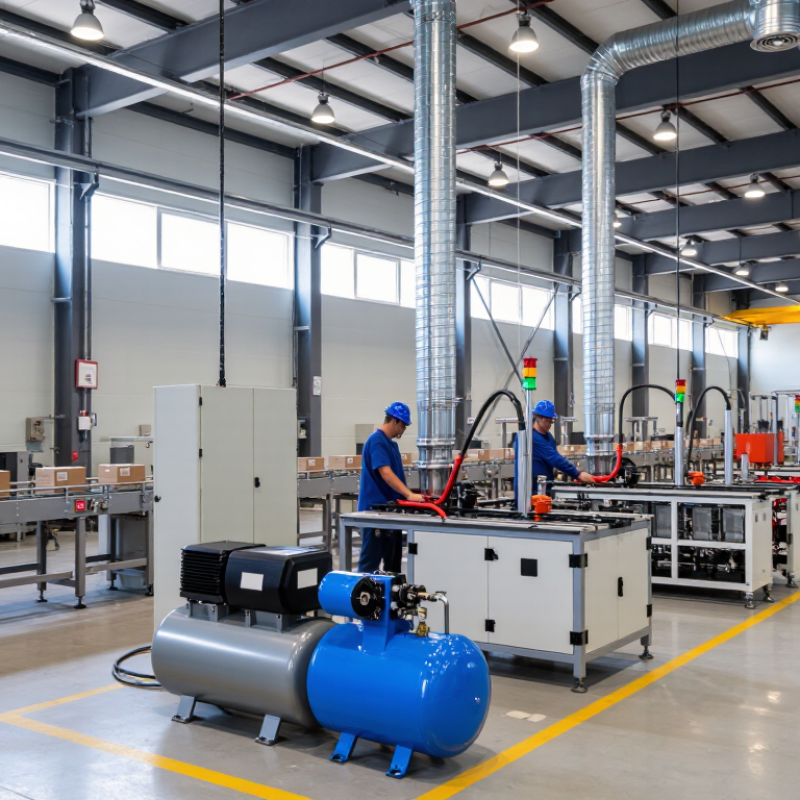
Why Choose an Air Compressor for Industry?

What an Industrial Air Compressor Is and How It Works

Why Choose an Air Compressor for Industry?

What an Industrial Air Compressor Is and How It Works

An industrial air compressor is a machine that draws in ambient air and raises its pressure for use in equipment and production processes. It does this by reducing the air’s volume, usually with a motor-driven pump. The compressed air then travels through pipes to tools, actuators, or machines that need a steady supply.

Simple in principle. More involved in practice.

Different compressor designs use different methods. A reciprocating model moves a piston inside a cylinder, while a rotary screw model traps air between rotating elements. In either case, compression produces heat, so cooling is part of normal operation. Moisture can also collect as air cools; filters and dryers help manage it before distribution. A receiver tank stores compressed air and helps meet short periods of high demand. Pressure controls keep the system within its intended operating range.

In a workshop, a hose may power a pneumatic tool; on a production line, compressed air may move a cylinder repeatedly. The right system depends on required pressure, air volume, duty cycle, and air quality. Bigger is not automatically better. An oversized unit can waste energy, while an undersized one may struggle during peak use. Real demand can be hard to estimate, so measuring usage over time is often wiser than relying on a quick guess.

Where Compressed Air Is Used in Industry

Compressed air serves as a flexible utility across factories, from powering tools to moving materials. In metalworking shops, pneumatic grinders and impact wrenches handle repetitive tasks; in packaging lines, air cylinders push cartons and operate valves. Instrument air also helps control process equipment. The U.S. Department of Energy’s Improving Compressed Air System Performance: A Sourcebook for Industry reports that compressed air uses about 10% of industrial electricity, reaching as much as 30% in some facilities. That is a substantial share for a utility that can be easy to overlook.

Its role changes with the process. Conveying systems use air to move powders or granules through pipes, while assembly lines use it to clamp parts in place. Food and pharmaceutical operations may need air that is carefully filtered and dried when it contacts products or equipment. Small details matter. Moisture in a line can corrode tools or disrupt sensitive controls. The DOE sourcebook also notes that leaks commonly waste 20–30% of compressor output. A hiss near a coupling may seem minor, but across a plant, small leaks add up. Air pressure is not the whole story; matching flow, air quality, and demand to each use takes regular review.

How Air Compressors Support Industrial Productivity

In a factory, compressed air can run pneumatic tools, move packaging, and operate control valves. When the supply is steady, workers spend less time waiting for equipment to recover. A receiver tank helps cover brief demand spikes, while correctly sized piping reduces pressure loss across the floor. That matters.

Air quality also affects productivity. Moisture can corrode lines or interfere with sensitive equipment, so separators and dryers should match the process. Filters need regular checks; a clogged element may restrict flow and make tools seem weaker than they are. Small leaks add up, especially around quick-connect fittings and older hose joints. A simple leak survey can reveal wasted capacity.

The compressor itself is only part of the system. Operators should track pressure, temperature, and operating hours, then follow maintenance intervals suited to actual use. In practice, settings that look efficient on paper may fail during a busy shift if several machines start together. It is worth reviewing demand with production staff, not just selecting equipment by peak ratings. And no system stays efficient by itself: dusty intakes, poor ventilation, and neglected drains can quietly undermine output.

Key Benefits of Compressed Air in Manufacturing

In manufacturing, compressed air moves tools, clamps parts, and operates pneumatic cylinders on assembly lines. Its usefulness comes from being easy to distribute through pipes to multiple workstations. A hose can deliver power where an electric motor would be awkward or exposed to repeated movement. The response is quick. A cylinder can extend, hold, and retract within a tightly timed production cycle.

Compressed air also supports conveying, packaging, and controlled cleaning when the air quality suits the task. Dry, filtered air helps protect valves and instruments from moisture and particles. That matters. A wet line can cause sticking valves, uneven operation, or product contamination in sensitive processes. For technicians, pressure readings and flow checks offer practical clues when a machine slows down or behaves inconsistently.

There is a trade-off. Compressors use significant electricity, and leaks can waste energy even during quiet shifts. A gauge may show acceptable pressure while a distant tool still suffers from undersized piping or clogged filters. The system is not magic. Routine leak checks, appropriate filtration, and matching compressor capacity to actual demand improve reliability. Yet demand changes, and settings that work on one line may not suit another. Regular measurements are more useful than assumptions.

Why Choose an Air Compressor for Industry?

Compressed air powers tools, controls, and automation across manufacturing. Its electricity use makes system efficiency an important operational consideration.

The U.S. Department of Energy reports that compressed air systems account for about 10% of industrial electricity use on average, and can reach 30% in some facilities. Source: U.S. DOE, Improving Compressed Air System Performance.

Factors to Consider When Choosing an Industrial Air Compressor

Why Choose an Air Compressor for Industry?

Factors to Consider When Choosing an Industrial Air Compressor

Choosing an industrial air compressor starts with the work it must support. List the tools and processes that use compressed air, then estimate their flow and pressure requirements. Check whether several machines run at once. Peak demand matters, but so does the typical shift. A unit sized only for occasional peaks may waste energy. Too small, and pressure can sag when production rises.

Air quality is equally important. Dust, moisture, or oil carryover can damage equipment or affect sensitive processes. Match filtration and drying equipment to the required air specification, not to guesswork. Oil-free compression may suit some applications, but it is not automatically the best fit for every plant. Confirm process requirements and operating costs. Details matter.

Consider duty cycle, energy use, noise, heat, and maintenance access. A compressor running near full load for long periods needs a different assessment from one serving intermittent demand. Variable-speed control can help when demand changes, though savings depend on the load profile. Check room ventilation and leave space around service panels. Measure pressure drop through piping, too. It is easy to overlook. I would also question any estimate based on outdated production figures; real demand shifts, and the first calculation may be wrong. Keep room for review.

FAQS

How does compressed air support factory work?

It powers pneumatic tools, clamps parts, moves packaging, and operates control valves. That keeps production moving.

What does a receiver tank do?

It supplies air during brief demand spikes, such as several machines starting together. It cannot fix an undersized system.

Why do pipes affect tool performance?

Narrow or poorly sized pipes can cause pressure loss across the factory. A distant tool may feel weak even when the main gauge looks normal.

How can moisture affect equipment?

Moisture can corrode lines and make valves stick. Dryers and separators should suit the process.

What should workers check when a tool seems weak?

Check pressure, airflow, filters, and hose connections. A clogged filter can restrict flow. So can a small leak.

How can factories find wasted air?

Inspect quick-connect fittings and older hose joints for leaks. A simple leak survey can reveal lost capacity.

Why should compressor capacity match actual demand?

Peak ratings may not reflect a busy shift or several machines starting together. Production staff can help describe real demand.

What routine care helps maintain reliable output?

Track pressure, temperature, and operating hours. Check filters, drains, ventilation, and dusty intakes. Maintenance plans need regular review.

Conclusion

An Air Compressor For Industry converts electrical or mechanical energy into pressurized air, which can be stored and delivered to equipment as needed. In manufacturing and other industrial settings, compressed air powers pneumatic tools, operates control systems, supports material handling, and assists with tasks such as cleaning and packaging. Because it can be distributed through a facility, it helps workers run multiple processes with a flexible, readily available source of power.

Using compressed air can support productivity by enabling consistent equipment operation and reducing reliance on manual effort in suitable applications. Its benefits may include versatility, convenient distribution, and compatibility with a wide range of machinery. Choosing the right compressor requires assessing air demand, required pressure, operating hours, energy efficiency, installation space, maintenance needs, and the quality of air required for the process. Matching these factors to actual production requirements helps create a dependable and efficient compressed-air system.

Sophia

Sophia

Sophia is a dedicated marketing professional with an exceptional depth of knowledge about her company's products and services. With a keen understanding of market trends and customer needs, she crafts insightful blog posts that not only inform but also engage readers, enriching the company’s online......