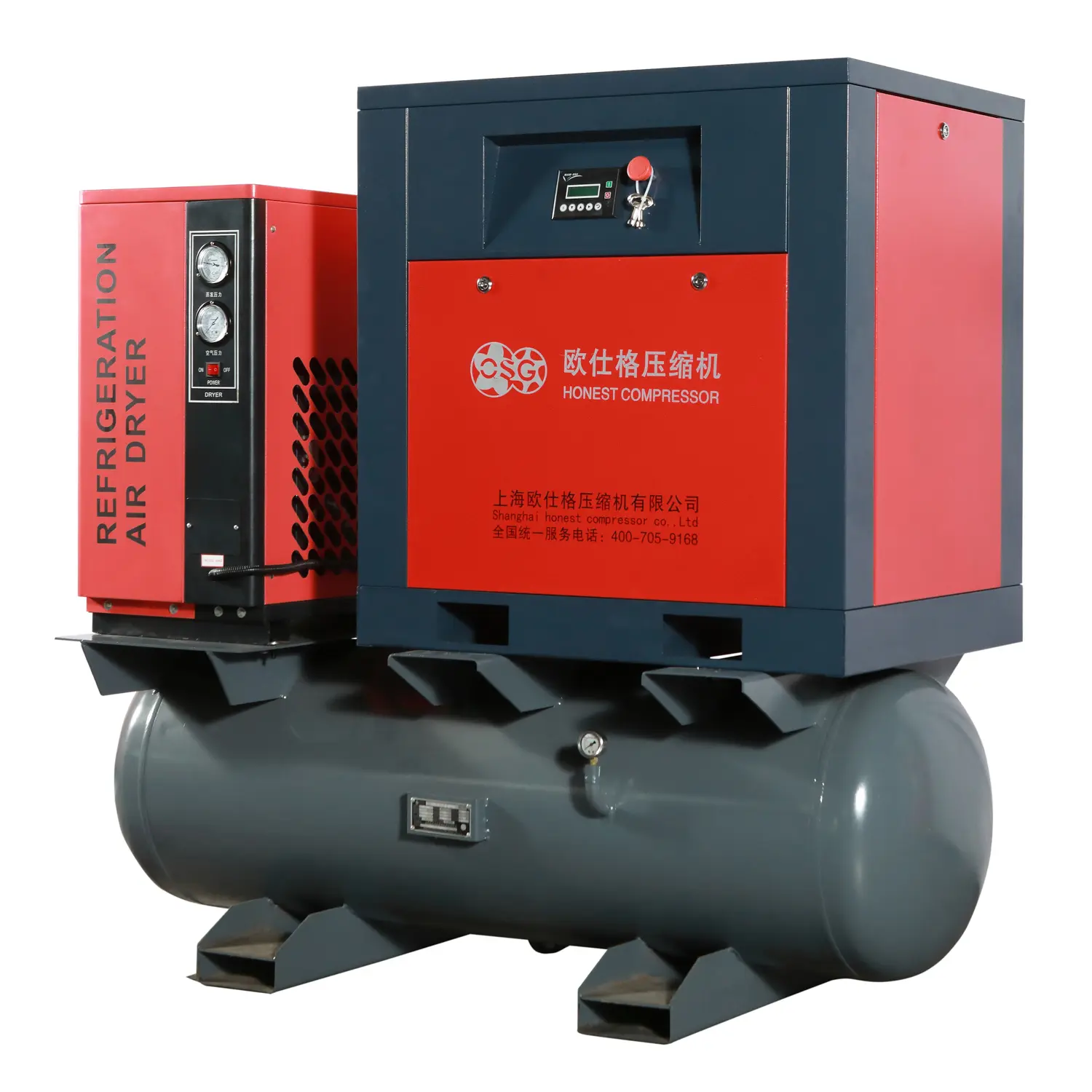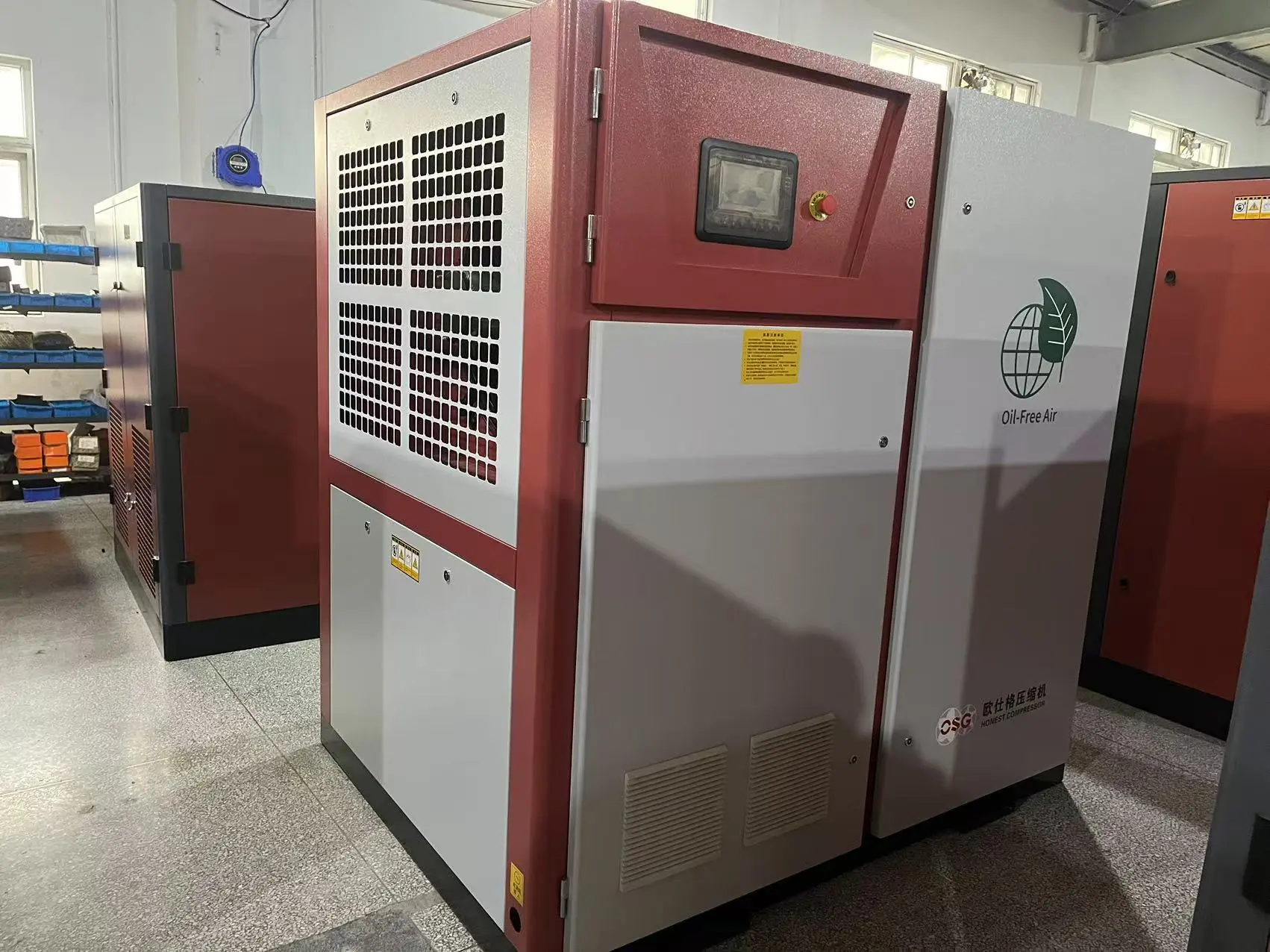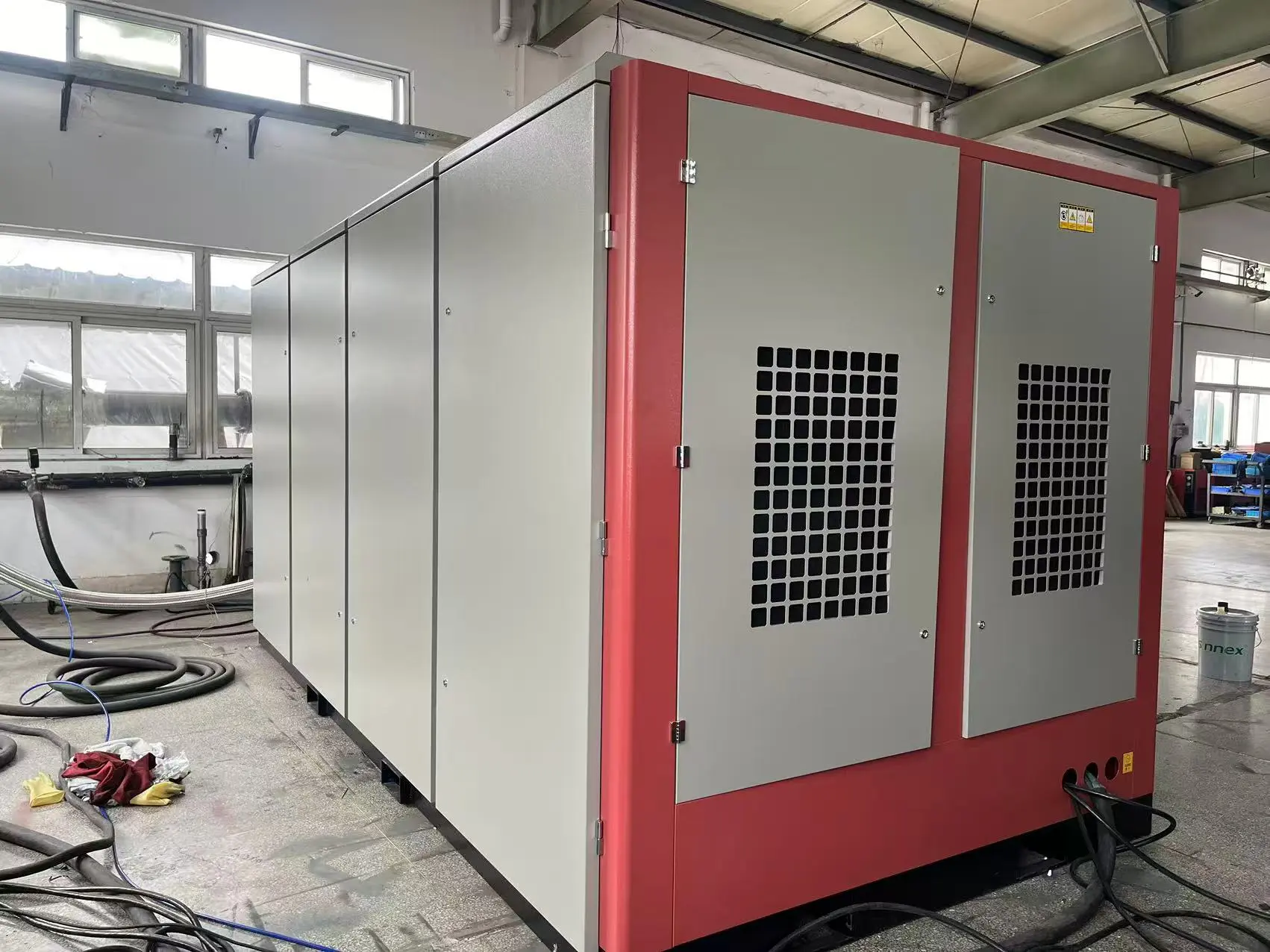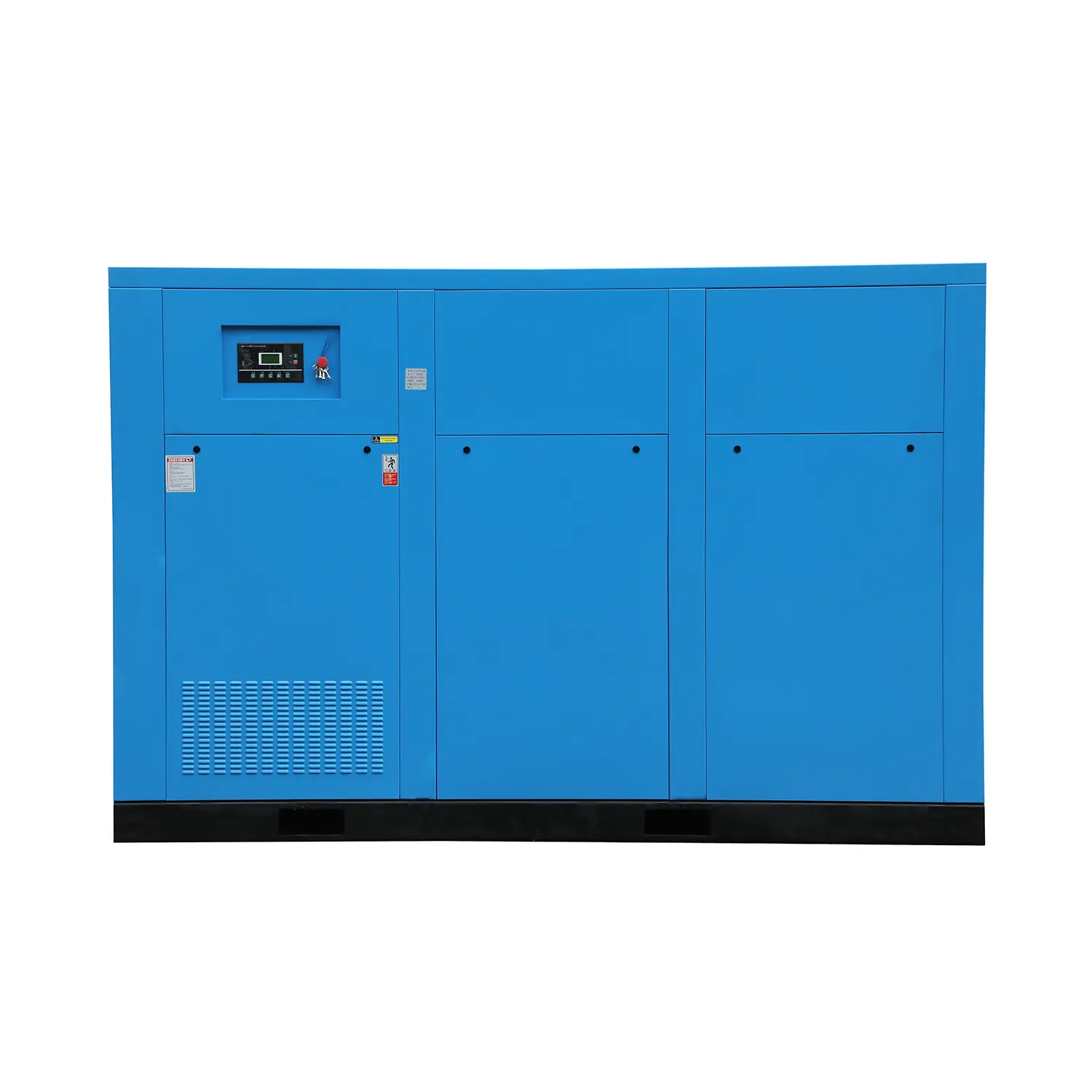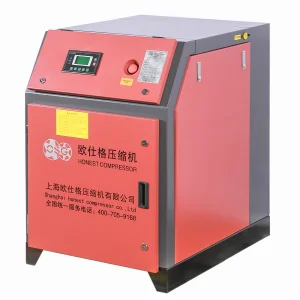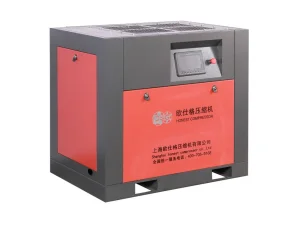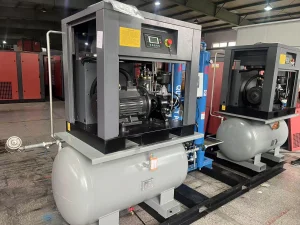
Belt-Driven Screw Air Compressors: Technical Whitepaper
An in-depth analysis of structural integrity, engineering trends, and thermal efficiency advantages in modern plant automation.
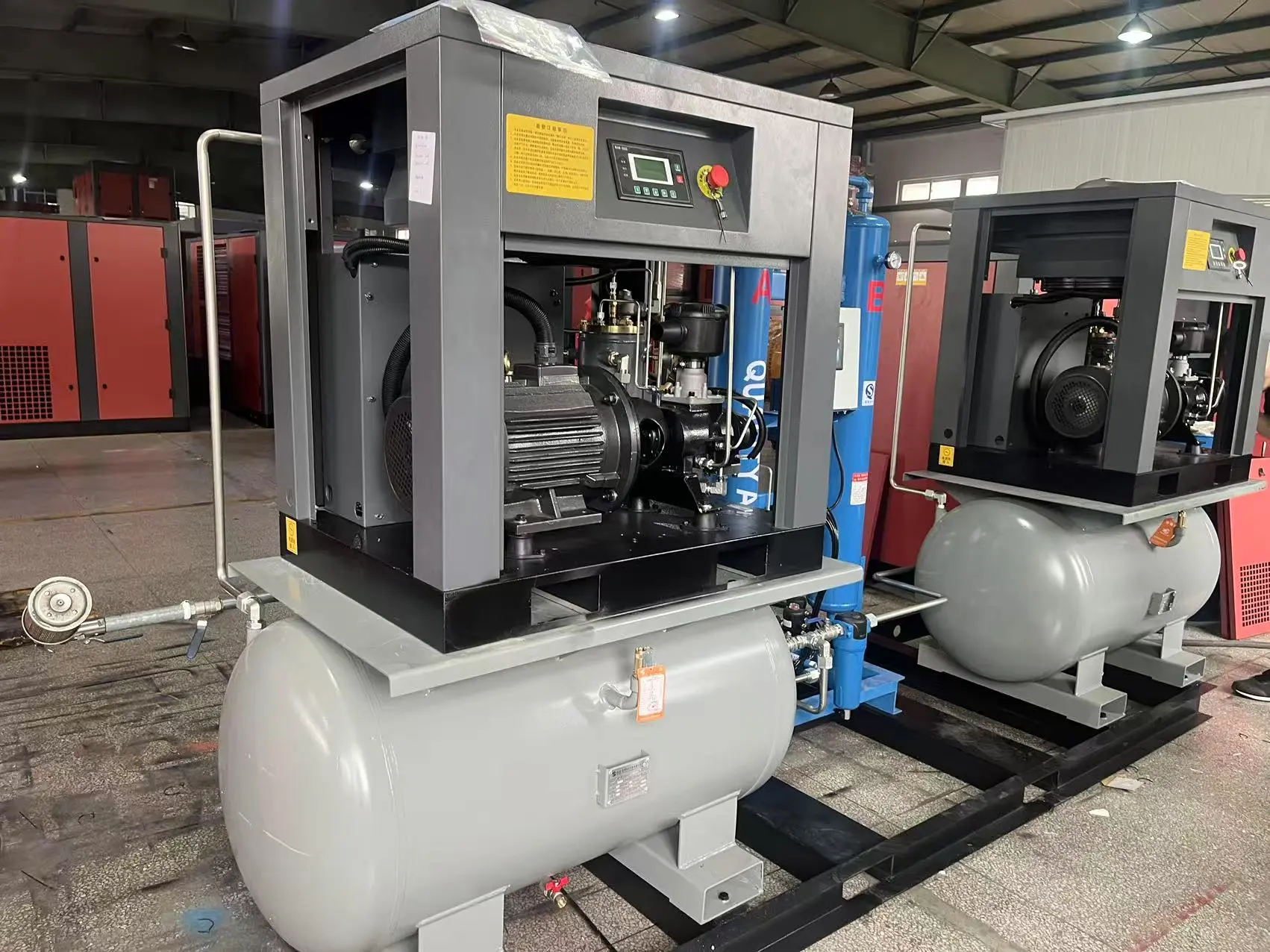
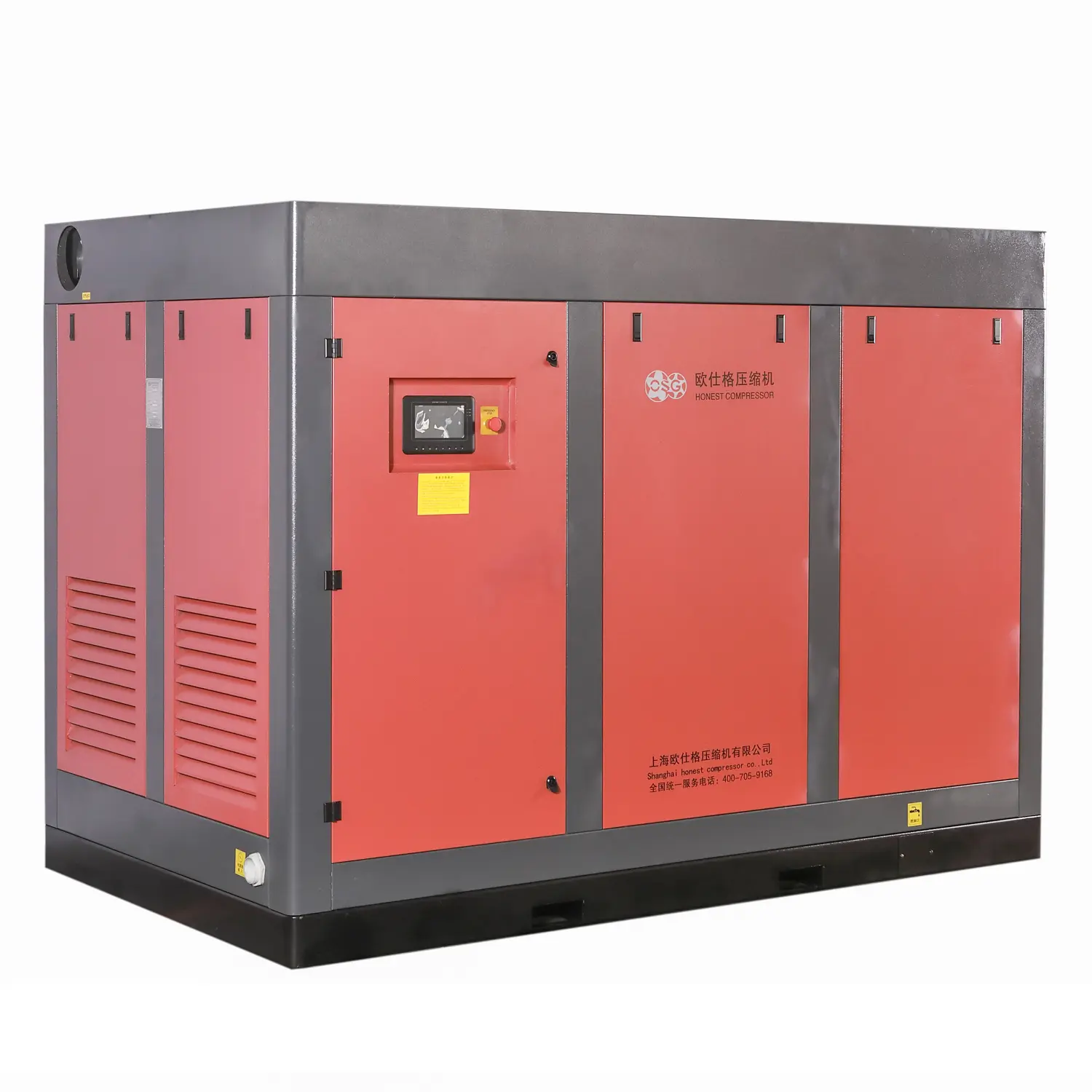
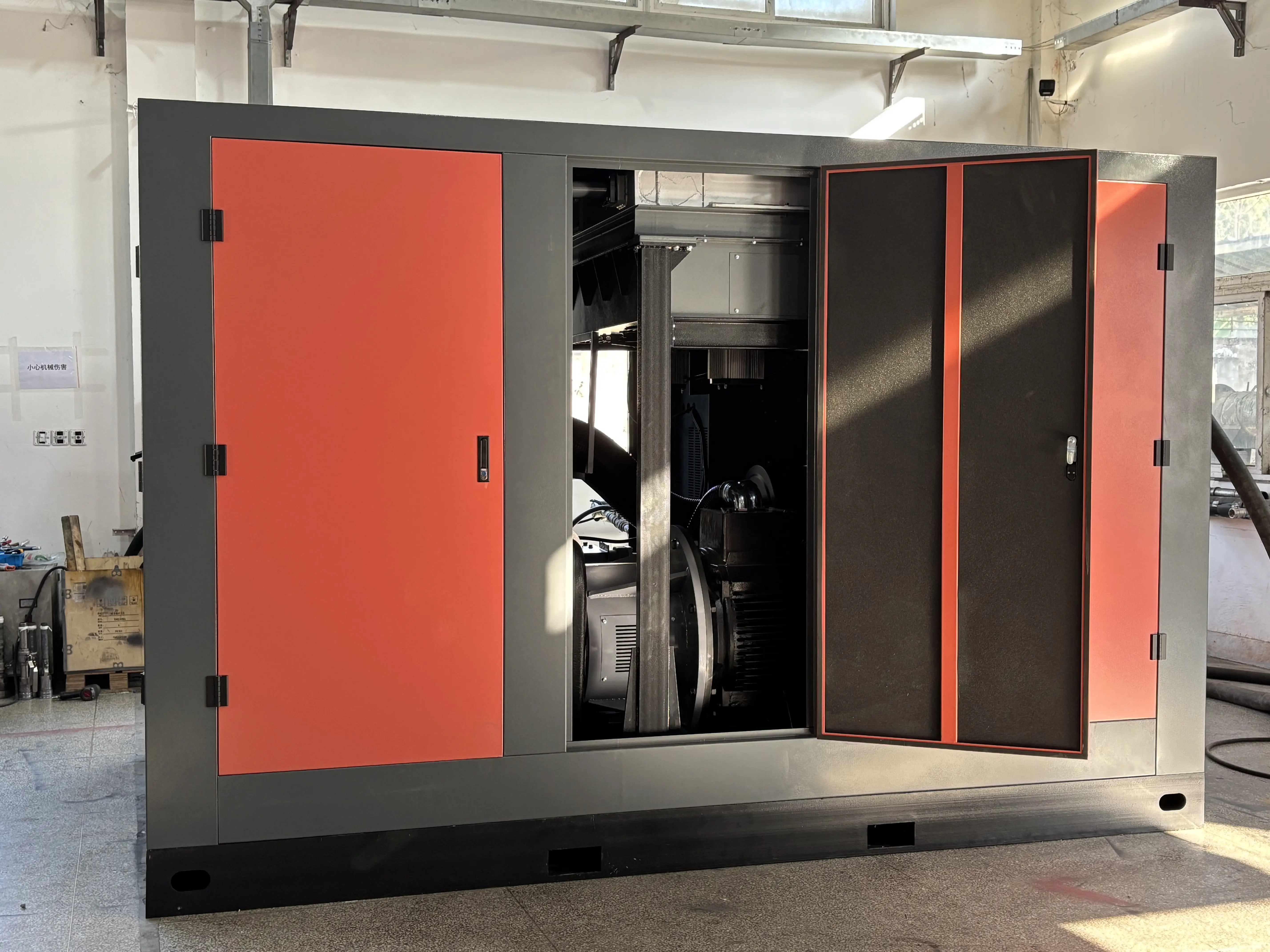
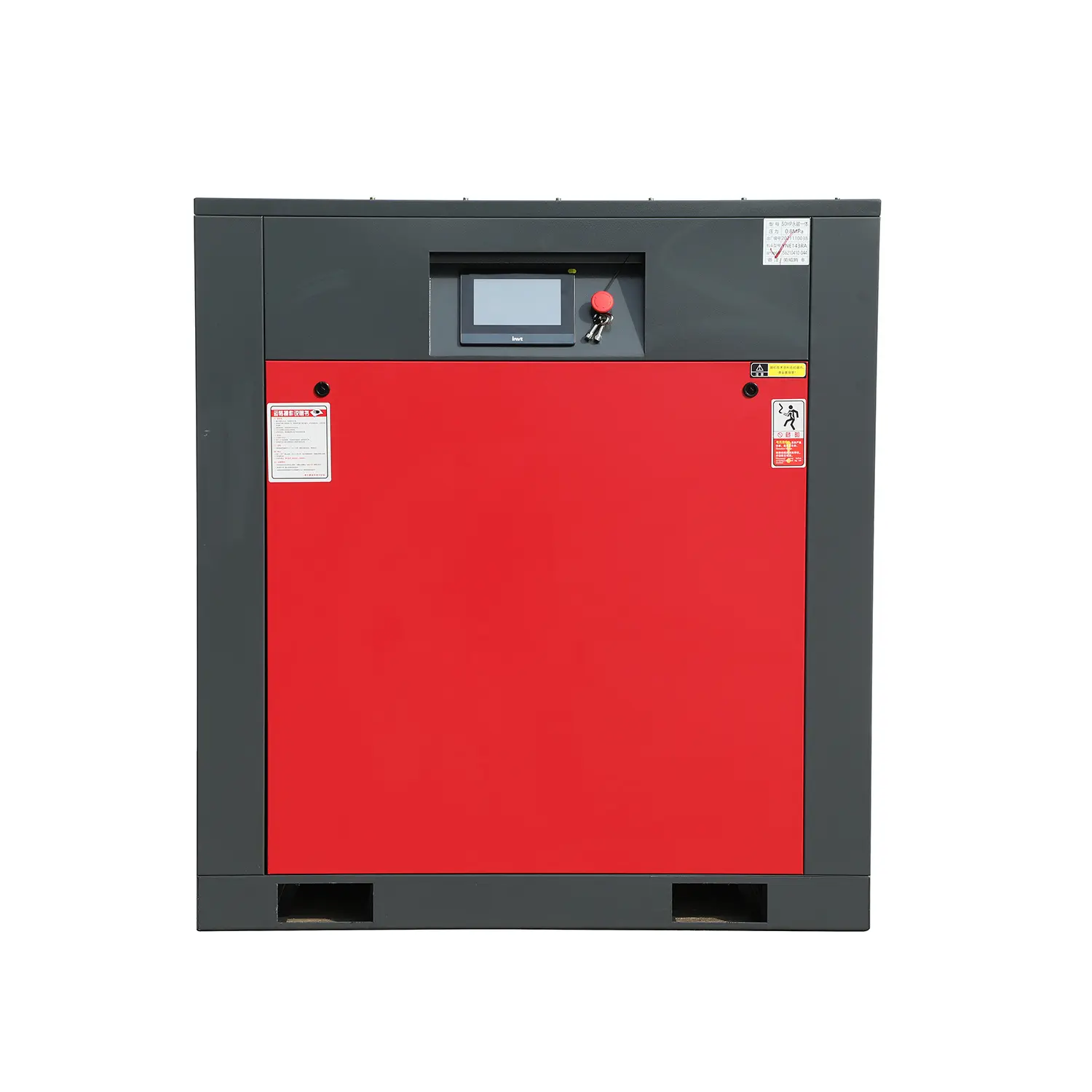
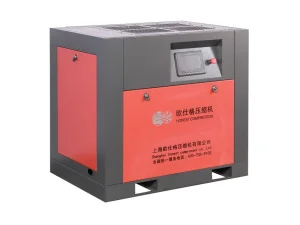
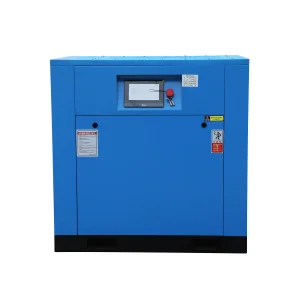
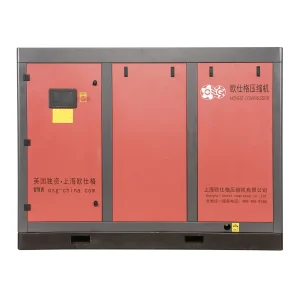
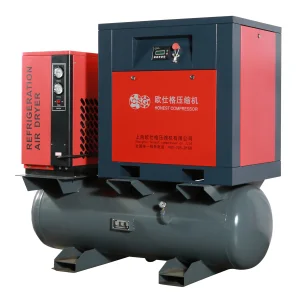
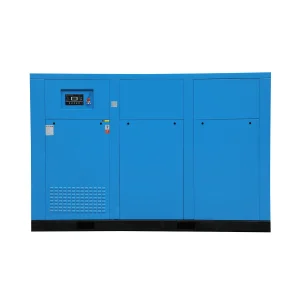
In modern industrial manufacturing, compressed air acts as the fundamental utility alongside electricity and water. Selecting the appropriate transmission system for a screw compressor is a major decision affecting both capital expenditure (CAPEX) and operating expenses (OPEX). While direct-drive models dominate ultra-high horsepower installations, belt-driven air compressors remain a reliable, highly adaptable, and cost-effective choice for small-to-medium industrial environments ranging from 3.7 kW (5 HP) to 45 kW (60 HP).
Understanding Transmission Dynamics: Belt vs. Direct Drive
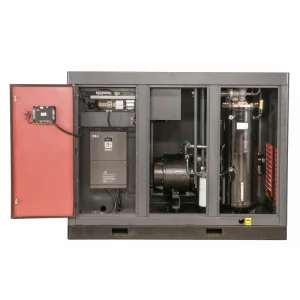
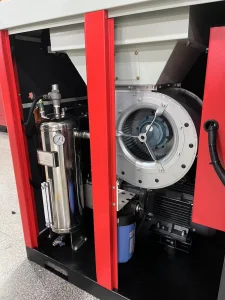
Belt-driven screw compressors utilize a precision-engineered pulley and V-belt system to transfer mechanical power from the electric motor to the rotor block (airend). This configuration provides unique advantages:
- Speed Adaptability: By altering the ratio of the motor pulley to the airend pulley, manufacturers can easily tune the operating speed of the airend. This allows the same compressor unit to be adjusted for different operating pressures (e.g., 7 bar, 8 bar, 10 bar, or 13 bar) without requiring a complete motor or airend redesign.
- Shock Absorption and Mechanical Isolation: The belt acts as a natural dampener, preventing torque spikes and axial vibration from transferring between the motor shaft and the rotor bearings. This protection significantly extends the service life of both motor and rotor bearings.
- Maintenance Simplicity: Belt tensioning or replacement requires basic tools and minimal downtime. Unlike direct-drive couplings, there are no elastomeric inserts to break down internally, and alignment tolerances are far more forgiving.
Optimized Airend Speed
Precise pulley ratios allow the airend to operate at its peak design speed, maximizing volumetric output while avoiding energy-wasting over-rotation.
Dynamic Tensioning
Automated belt-tensioning brackets adjust under load to prevent slip, ensuring consistent transmission efficiency and preventing premature belt wear.
High EPDM Thermal Limit
Our heavy-duty industrial belts are rated for operational limits up to 120°C, ensuring stability in continuous-duty applications.
Macro Industry Trends in Compressor Design
In response to rising global energy costs and emissions regulations, the industrial air compression sector is undergoing a massive shift. The integration of Permanent Magnet Variable Speed Drive (PM VSD) systems represents a major technological leap. PM motors maintain high efficiency levels even at low speeds, in contrast to traditional induction motors which suffer from drop-offs in power factor and efficiency during partial-load conditions.
Furthermore, digital transformation (Industry 4.0) has led to the widespread adoption of smart microcontrollers with Modbus and CAN bus communication protocols. These systems continually monitor pressure, vibration, oil temperature, and drive-belt health. This enables predictive maintenance strategies that drastically reduce unexpected downtime.