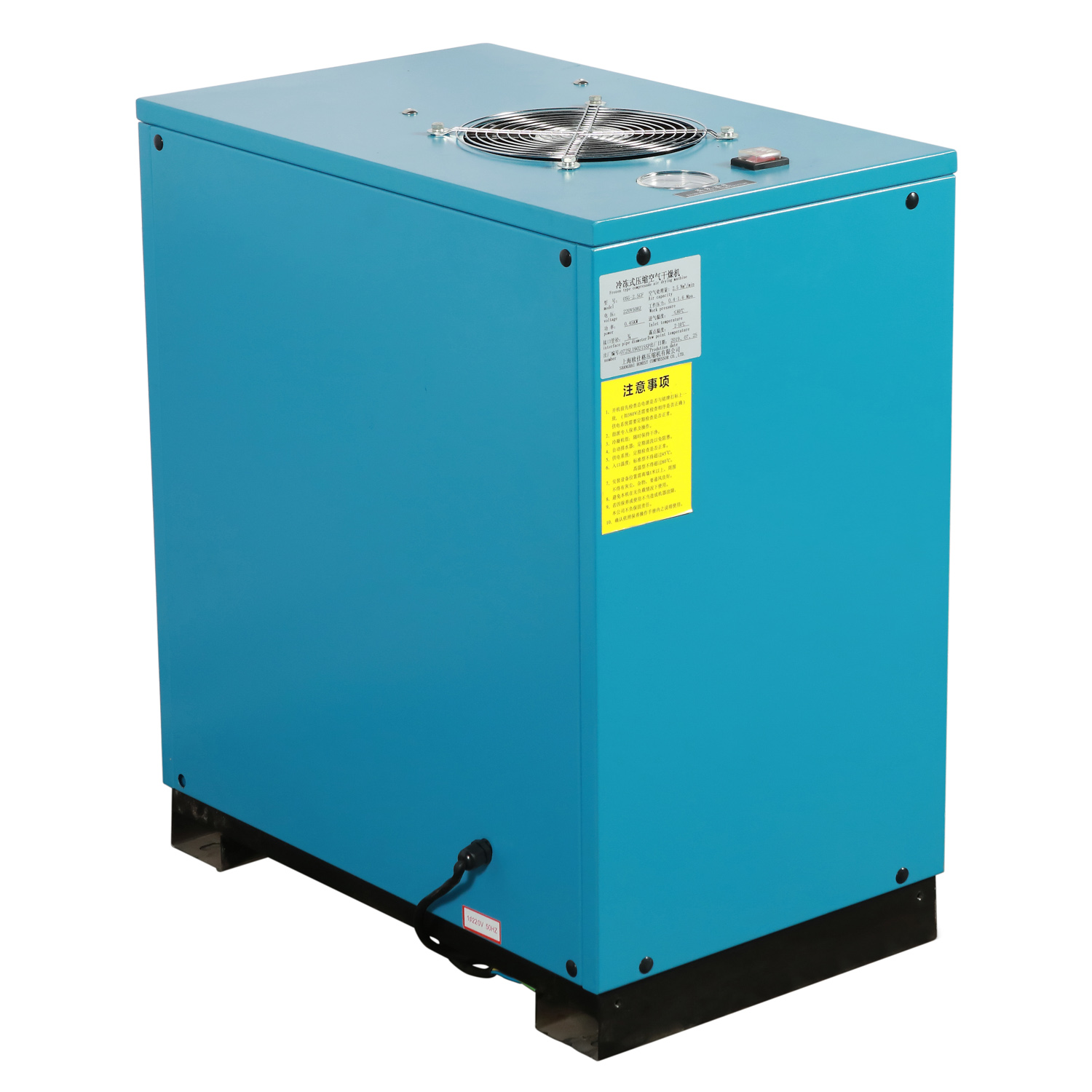
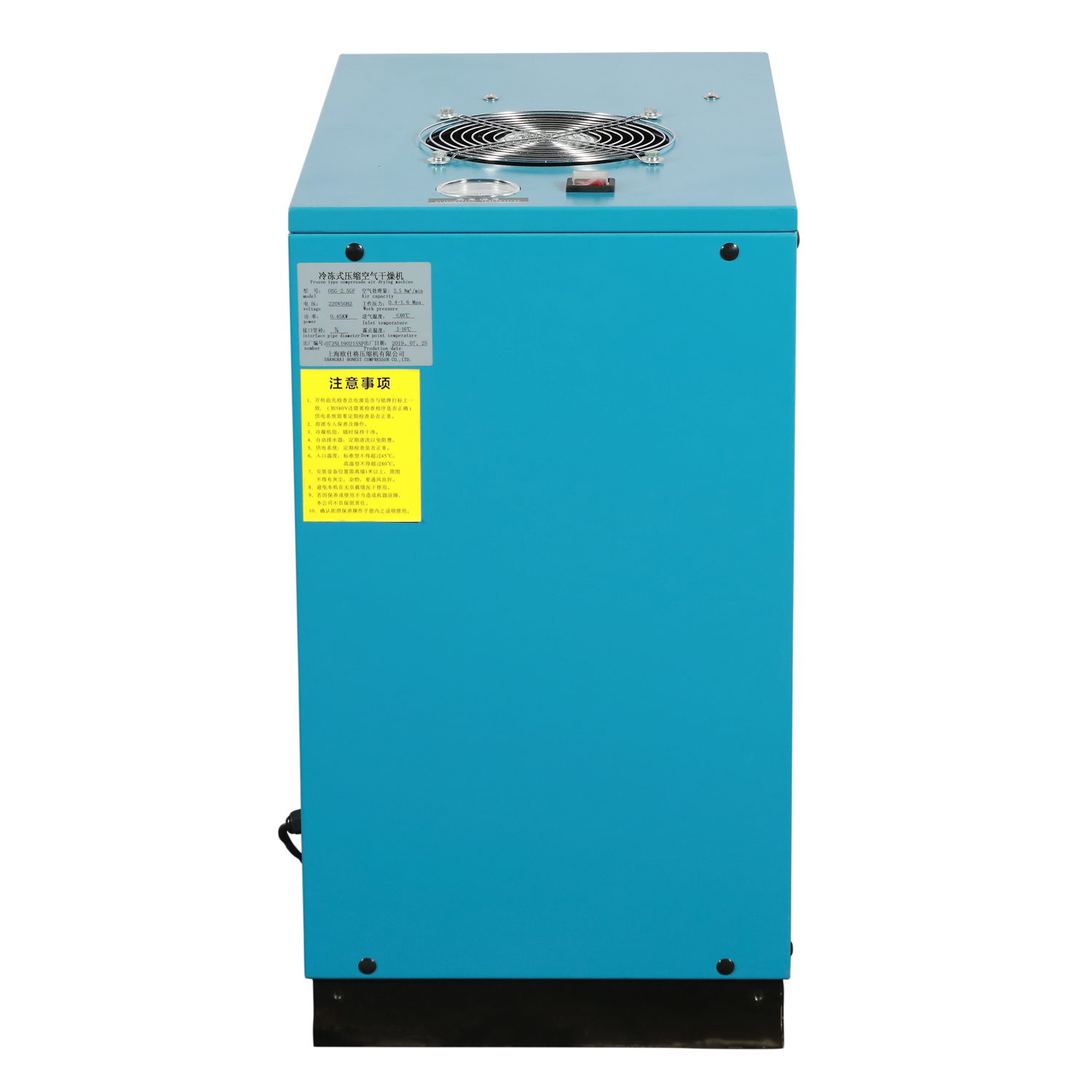
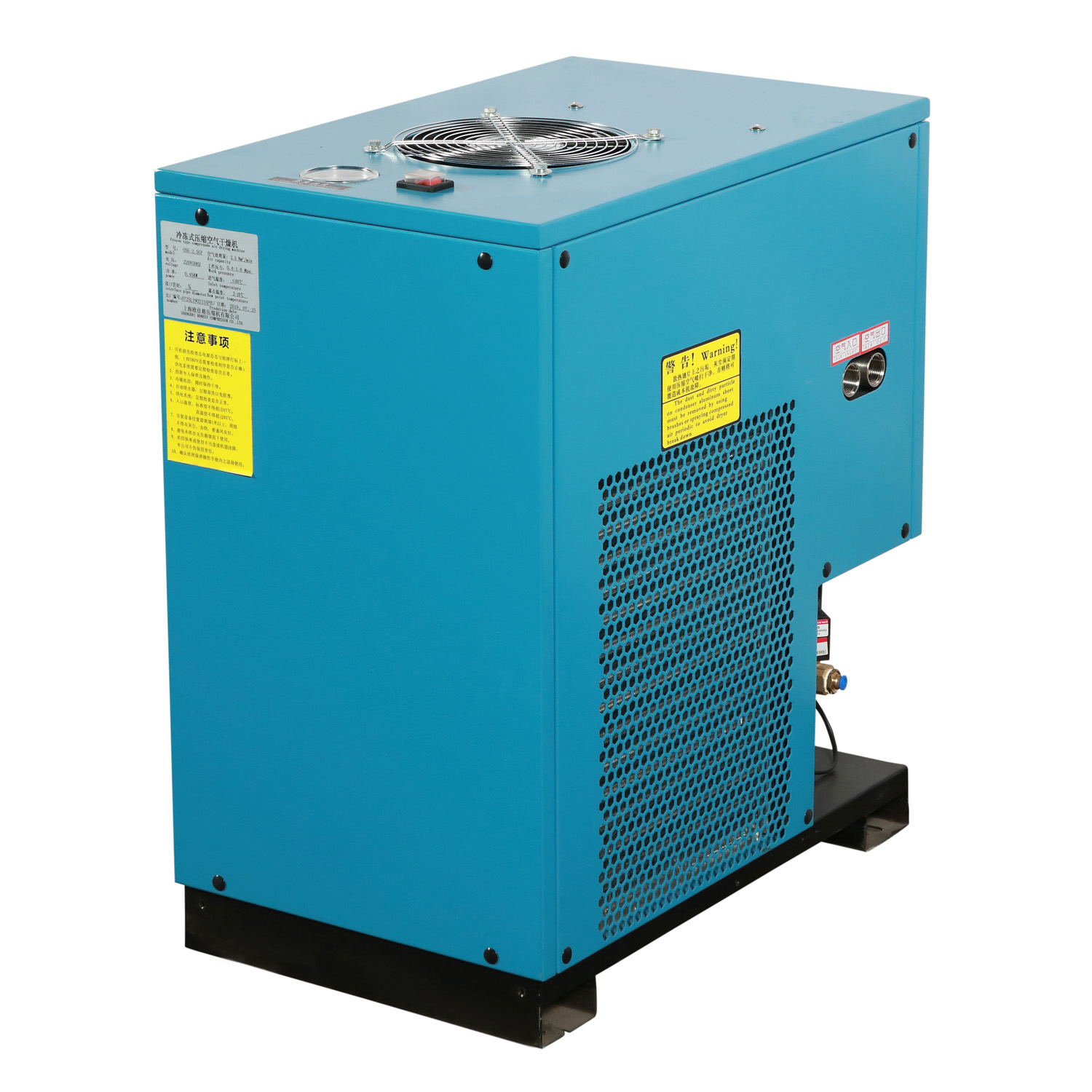
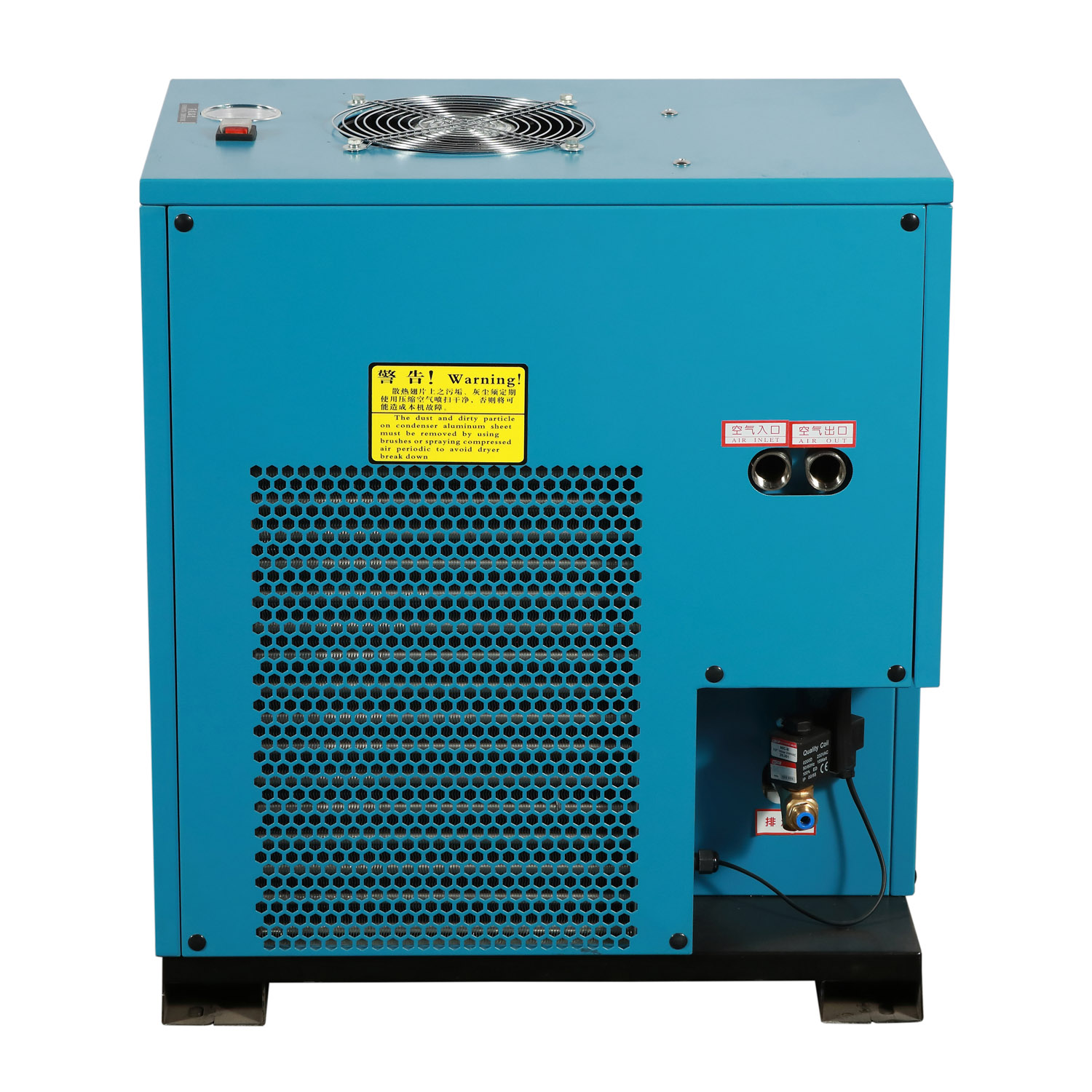
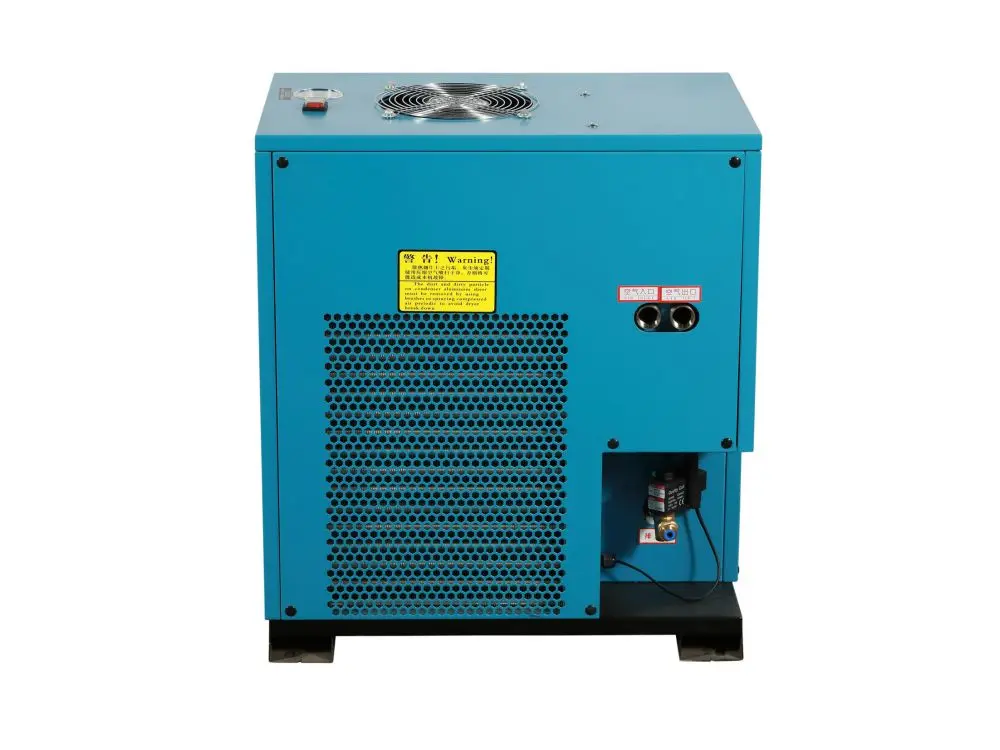
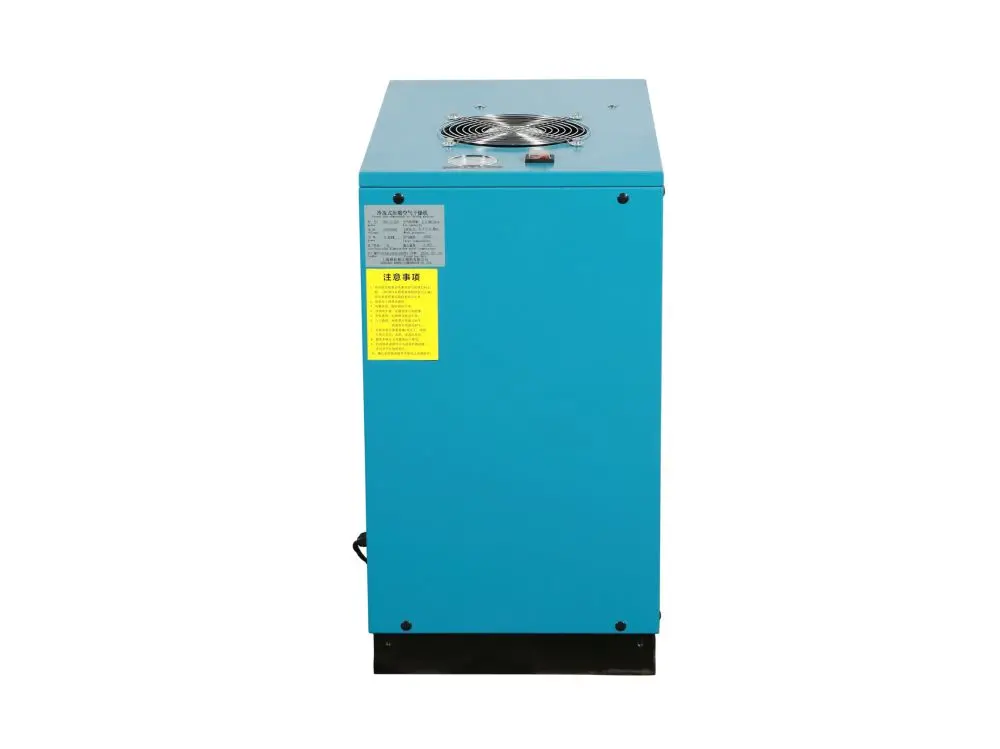
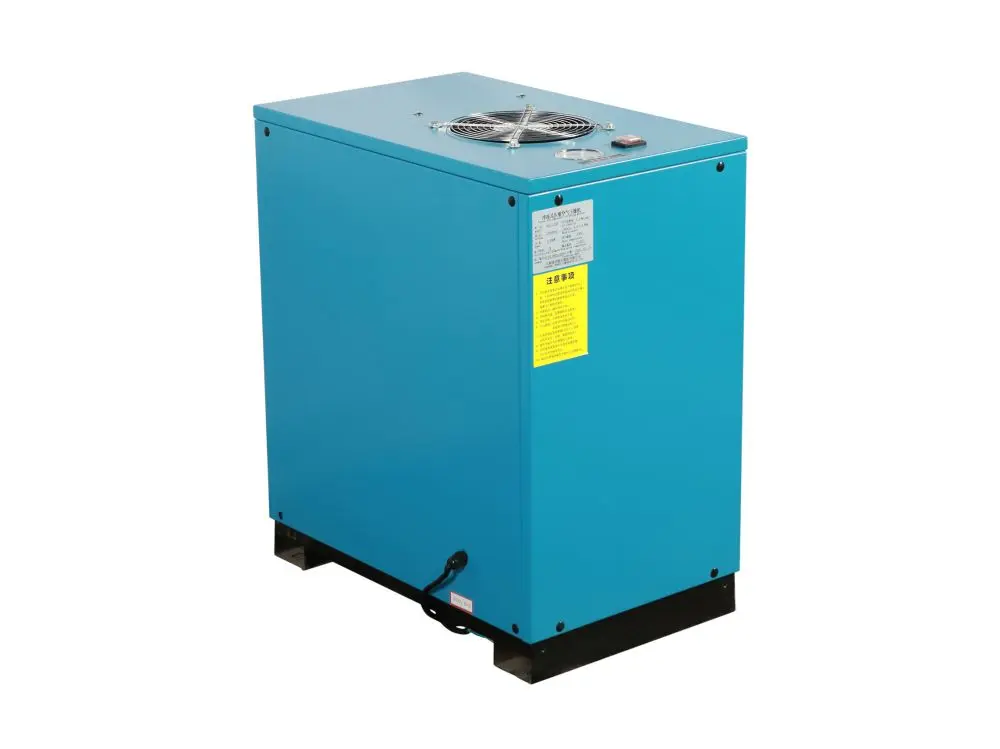
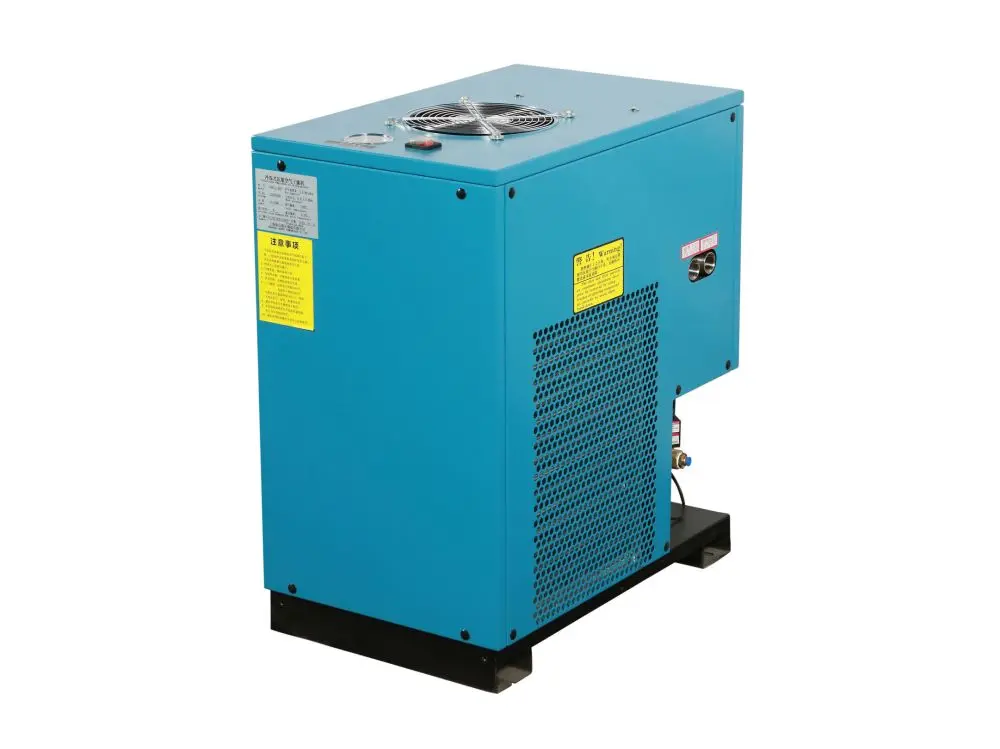
Working Principle
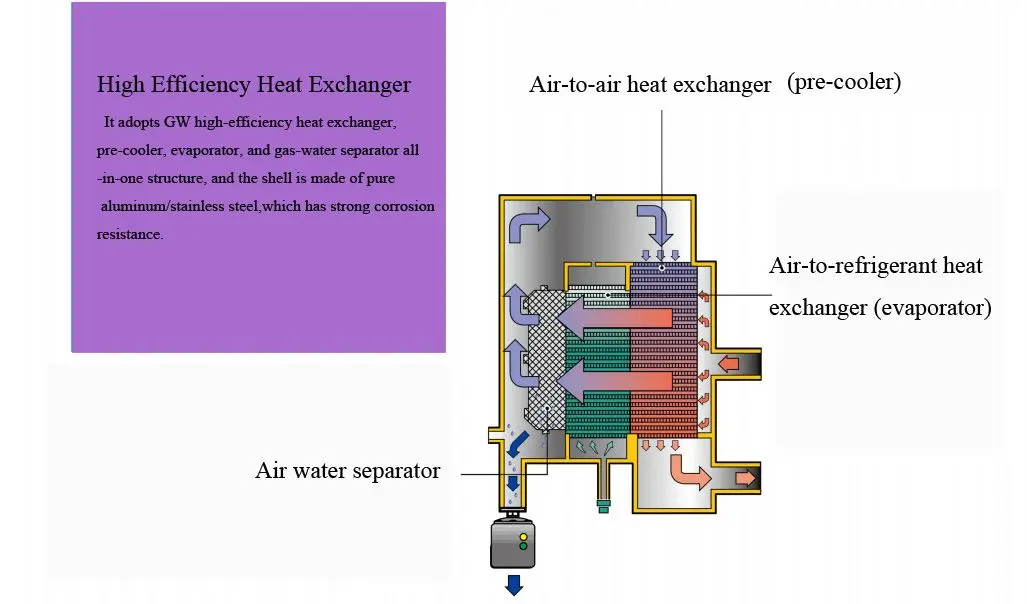
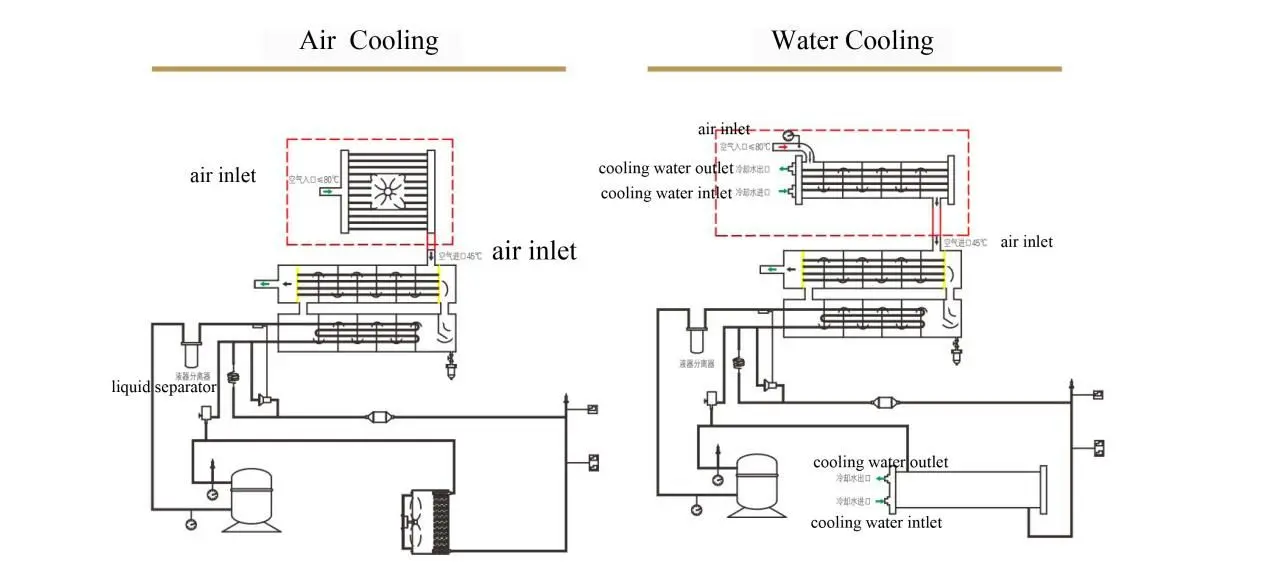
The refrigerated dryer adopts the working principle of cooling and condensation, and is mainly composed of three parts: heat exchange system, refrigeration system and electrical control system. The compressed air first enters the pre-cooler for air-air or air-water heat exchange, and then enters the cold and hot air exchanger to exchange heat with the cooled cold air that has come out of the evaporator to further reduce the temperature of the compressed air. After that, the compressed air enters the evaporator and exchanges heat with the refrigerant. The temperature of the compressed air drops to 0-8°C. The moisture in the air is precipitated at this temperature, separated by the gas-water separator, and then discharged through the automatic drain. The dry low-temperature air enters the hot and cold air exchanger for exchange, and is output after the temperature rises.
Frequently Asked Questions
1. What is the working principle of this refrigerated dryer?
The dryer operates on a cooling and condensation principle. It lowers the temperature of the incoming compressed air to 0-8°C, which precipitates moisture. The water is then separated by a gas-water separator and discharged via an automatic drain before the dried air is warmed and output.
2. What type of compressor is utilized in the system?
The system utilizes advanced rotary, scroll, piston-type hermetic, or semi-hermetic screw compressors (for models above 20HP). These compressors are selected for their reliable performance, low noise, and power-saving operations.
3. What is the protection rating of the compressor?
The refrigeration compressor features a protection level of IP54, providing robust protection against dust and splashes for long-term operational reliability.
4. How is secondary pollution of the compressed air prevented?
The cylinder material of the heat exchanger is constructed from stainless steel or galvanized carbon steel, preventing rust and secondary contamination of the dry compressed air.
5. What are the electrical power requirements for these models?
Models up to and including OSGA-12NF require a 220V 50Hz 1P power supply. All other larger models require a 380V 50Hz 3P power supply.
6. Is special foundation or installation required?
No, the equipment is designed for stable operation without the need for a dedicated foundation. Its structure allows for easy maintenance, low operating costs, and does not require dedicated operators.