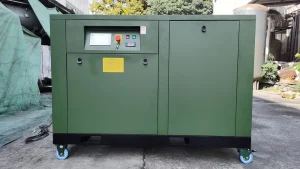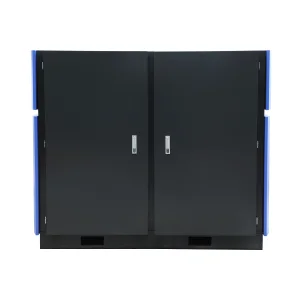
Premium grade oil-free screw compressions designed to withstand aggressive Texas Gulf Coast ambient temperatures and demanding relative humidity parameters.
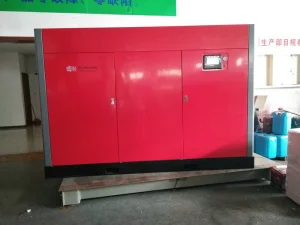
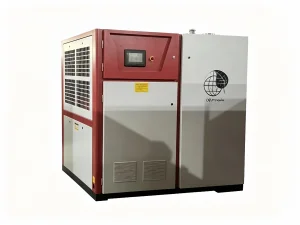
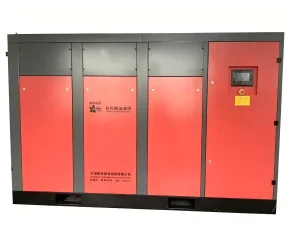
As the industrial heartbeat of North America, the Houston metropolitan area—encompassing the massive Houston Ship Channel, the extensive petrochemical complexes in Baytown, Pasadena, and Freeport, as well as the world-renowned Texas Medical Center—demands an uncompromising standard for compressed air quality. Within these highly regulated environments, compressed air is not merely a utility; it is a critical process component.
Any trace of hydrocarbon contamination can compromise catalyst performance, degrade pneumatic instrumentation, ruin pharmaceutical batches, or lead to catastrophic safety hazards in oxygen-rich process pipelines. This is why ISO 8573-1 Class 0 Oil-Free Screw Air Compressors have transitioned from an operational luxury to a baseline safety mandate across modern Gulf Coast facilities.
Traditional oil-flooded rotary screw compressors rely on filtration systems to trap lubricating oils down to a few parts per million. However, coalescing filters are subject to thermal degradation, bypass failures, and mechanical wear. In hot Houston summers, where ambient temperatures frequently surpass 100°F (38°C) with near-saturated humidity, downstream filter efficiency drops sharply. The only engineering defense against product contamination is true oil-free compression, where no oil enters the compression chamber.
The global demand for high-efficiency rotary screw systems is reshaping manufacturing paradigms. Historically, North American operations relied exclusively on domestic OEMs, incurring massive capital expenditures and high multi-year maintenance overhead. Today, direct procurement partnerships with advanced Chinese manufacturing hubs—such as the Shanghai industrial region—allow chemical producers, processing plants, and packaging OEMs to secure Tier-1 class oil-free systems at fraction of the capital cost.
This global supply chain shift is underpinned by significant innovations in China's industrial automation sector. Leading manufacturers leverage high-precision CNC rotor grinding machinery, advanced robotic assembly lines, and rigorous ISO testing facilities to deliver compression elements (aires) that meet or exceed European and American engineering standards.
An in-depth look at how Shanghai manufacturing excellence and vertical integration result in world-class quality at disruptive price points.
China's dominance in the air compressor export sector is not merely built on cost reduction; it is driven by structural manufacturing efficiencies, direct material supply chains, and rapid technological adoption. Shanghai Honest Compressor Co., Ltd., a British-owned enterprise founded in 2004, represents the ideal synthesis of European engineering compliance and optimized Chinese production capabilities.
Aires are machined on ultra-precise German rotor grinding lines, maintaining micro-level tolerances to guarantee high polytropic efficiency and minimal thermodynamic loss.
Integrating Permanent Magnet Variable Speed Drive (PM-VSD) motors directly into the main rotor drive line eliminates mechanical drive transmission losses associated with pulleys or gearboxes.
Compressors undergo rigorous long-duration test runs under simulated environmental loads to guarantee CE, ISO 9001, and Class 0 Oil-Free certification compliance.
By sourcing directly from advanced Shanghai facilities, Houston buyers cut out traditional multi-tier distributor markups. This yields capital cost savings of up to 40% while preserving crucial component quality, such as SKF bearings, Schneider electrical contactors, and high-performance PLC monitoring units capable of SCADA integration.
Industrial configurations in Houston dictate specific air quality criteria based on the downstream processes they support. Below are the primary application sectors where our oil-free screw installations are optimized for performance:
| Industry Sector | Primary Process Use Case | Critical Compressed Air Requirement | Recommended System Configuration |
|---|---|---|---|
| Petrochemical & Refining | Pneumatic instrumentation control, catalyst regeneration, purge gas supply | Hydrocarbon-free air, dew points down to -40°F (instrument air quality) | Dry Oil-Free Screw with Desiccant Air Dryer & VSD Control |
| Biomedical & Pharma | Pill pressing, sterile packaging, cleanroom air lines | Microbe-free, 100% oil-free (Class 0), low noise limits | Water-Lubricated Oil-Free Screw, stainless steel internals, HEPA filters |
| Food & Beverage | Product transfer, aseptic bottling, pneumatic packaging systems | Zero oil contamination risk, low moisture to prevent fungal growth | Water-Lubricated / Dry Oil-Free Screw with Refrigerated Dryers |
| Advanced Laser Cutting | Assist gas supply for precise cutting lines (nitrogen/air) | High-pressure dry air (15.5 bar to 16 bar), particulate-free | Special High-Pressure Screw Compressor (15.5 bar) with Integrated Dryer |
When designing an oil-free compressed air facility, engineers must choose between two primary thermodynamic approaches: Dry Type Oil-Free and Water-Lubricated Oil-Free. Understanding their structural differences is key to optimizing energy usage and long-term upkeep.
Dry-type compressors rely on synchronous timing gears to maintain the precise alignment of the two rotors without their surfaces ever contacting. Because there is no lubricating fluid in the compression chamber, the air remains completely free of oil. However, without a liquid medium to absorb heat, dry screw units operate at high rotational speeds and rely on two-stage compression with intercoolers to manage high discharge temperatures.
Key Advantage: Zero risk of process liquid contamination; highly suitable for large-capacity, high-reliability requirements in continuous chemical manufacturing plants.
Water-lubricated units inject purified water into the compression chamber. The water acts as both a cooling medium and a lubricant, sealing the clearances between the rotors and the casing. This isothermal compression allows for single-stage efficiency that rivals or exceeds two-stage dry systems.
Key Advantage: Lower rotational speeds, lower operating temperatures (often below 50°C), and reduced mechanical stress. Very popular in pharmaceutical and semiconductor industries.
Contact our engineering and procurement team for a direct factory quote, customized layout designs, and localized Houston-area logistics options.
Send Inquiry NowExplore our highly integrated systems, customized pressure limits, and multi-stage configurations built for challenging industrial environments.
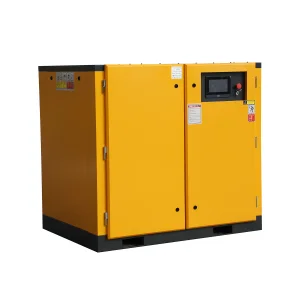
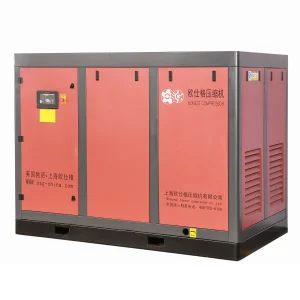
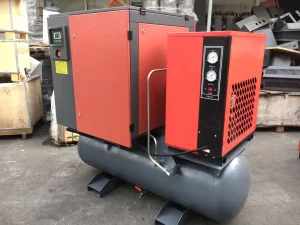
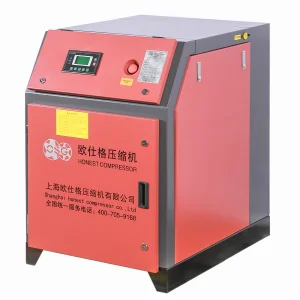
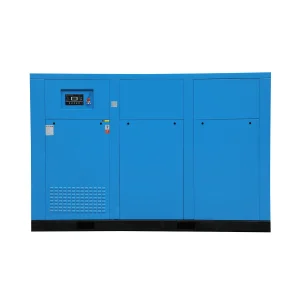
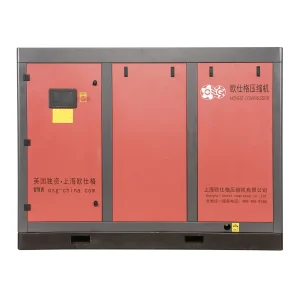
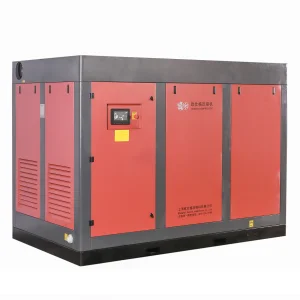
Modern global procurement departments are pivoting heavily toward sustainable engineering solutions. Industrial operations now evaluate compressors not just on initial Capital Expenditure (CAPEX) but primarily on Total Cost of Ownership (TCO) over a 10-year operating horizon. Given that electrical energy consumption constitutes up to 70% of a compressor's lifecycle cost, efficiency metrics like specific power consumption (kW/m³/min) are critical.
The introduction of PM-VSD technology has revolutionized this landscape. By dynamically adjusting motor output to match real-time downstream air demand, VSD units eliminate energy-intensive load/unload cycles. For a facility operating continuously in Houston, VSD optimization can translate to tens of thousands of dollars in annual utility savings, directly supporting corporate carbon offset goals.
Furthermore, digital integrations—such as IoT-enabled PLC controllers—have become standard in modern procurement checklists. Engineers can remotely monitor vibration signatures, discharge temperatures, dew points, and filter status in real time. This enables predictive maintenance, preventing unexpected plant downtime and extending the system's operational lifespan.
Critical answers for process engineers, procurement directors, and maintenance leads targeting oil-free systems.